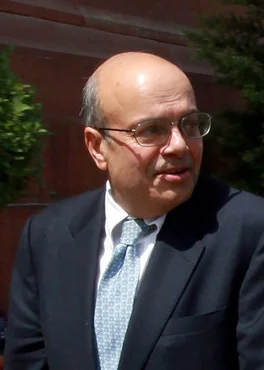
1. Business Role
Jain oversees insurance operations, with a career strongly associated with reinsurance and unusually large risk transactions. Berkshire's proxy describes his experience assessing and pricing complex risks. [S3]
The role differs from running every investment in the parent portfolio. Underwriters decide which obligations to accept and on what terms; investment and parent allocation decisions have their own authority and constraints.
Insurance leadership also includes people and incentives. The operating structure relies on managers who understand their markets, while group oversight must consider exposures that can accumulate across individual contracts.
2. The Business He Inherited
Jain joined Berkshire's insurance group in 1986, when the company already had insurance operations. He did not found National Indemnity or invent the idea of reinsurance. [S61][S64]
The opportunity was to use underwriting judgment and substantial capital to provide solutions that other insurers or customers might struggle to arrange.
That starting point matters. Capital provides capacity, but the quality of the business depends on the obligations purchased with that capacity. A large balance sheet can support either sound contracts or very expensive mistakes.
3. Business Thesis
The commercial logic is selective risk acceptance: understand the exposure, establish workable terms and preserve the ability to pay even when the outcome is unfavorable.
Buffett's 2008 description emphasized large, unusual transactions and speed of execution. This is firsthand historical evidence of Jain's role, not proof that speed alone produces superior underwriting. [S64]
An insurer creates value when the complete economics of premium, expenses, claims, timing and capital are attractive. Premium growth without suitable pricing can make the company larger while weakening its position.
4. Strategic Bets
Complex risk as a distinct capability
Assessing unusual contracts can create a differentiated commercial role. It requires technical judgment and the willingness to decline business that does not meet the intended economics.
Long-lived counterparties and agreements
Several insurance models rather than one policy
Berkshire combines primary insurance, traditional reinsurance and long-duration assumed obligations. The mix can broaden opportunity while increasing the need to understand different risks and reporting patterns. [S1]
5. How the Bets Changed the Business
The development of reinsurance gave Berkshire a way to take defined shares of risks originating elsewhere. It also created relationships and obligations that can last much longer than one annual renewal cycle.
Jain's 2018 appointment formalized broader insurance operating responsibility. It did not make General Re, GEICO, TransRe and National Indemnity one legal insurer or a single universal product. [S61]
The resulting system requires both business-specific expertise and an overall view of capital and aggregate exposure. A contract that appears manageable on its own can still contribute to a larger concentration.
6. Resource Allocation
For an insurance leader, resource allocation includes underwriting capacity and the capital committed behind promises. The company must decide how much exposure it can accept, not only how much premium it can collect.
Long payment horizons can provide investable balances, but the funds remain connected with claims and other obligations. They cannot be treated as permanent capital with no return requirement or liquidity constraint.
The same logic applies to people and systems. Specialist judgment, claims capability and exposure information support underwriting capacity; a capital commitment without those capabilities is incomplete.
7. Before and After
Jain's career extends from a specialist reinsurance role after joining in 1986 to group vice-chair responsibility from 2018. The current insurance portfolio is broader than the small historical operation described in old shareholder letters. [S64][S61][S3]
The original letters' employee counts and credit-rating descriptions are therefore not suitable as undated current facts. Their role is to explain the development of a capability.
The current comparison concerns a diversified insurance system with distinct providers and contract types, not an unchanged small team handling every insurance activity in Berkshire.
8. What Worked—and What Did Not
Berkshire's long record and continuing major counterparties provide evidence that its insurance capacity has commercial value. Period results still vary with catastrophe activity, claim estimates, pricing and contract mix.
The first-half 2026 reinsurance comparison includes significant catastrophe losses in the prior-year period and no comparable significant new catastrophe-event losses in the current period. That difference contributed to results; it is not a measure of Jain's personal forecasting accuracy. [S2]
Long-duration assumed business also produces accounting patterns that differ from conventional annual underwriting. A reported loss in a retroactive contract category is not automatically a failed bet, but it remains necessary to examine the full economic outcome.
The real limits are exposure, uncertainty and the possibility that estimates prove inadequate. Public reporting supports those constraints; it does not support inventing a particular undisclosed Jain mistake to complete a heroic or negative biography.
9. Business Legacy
Jain's enduring contribution is a risk-taking capability that links specialist underwriting with Berkshire's financial resources. Its value depends on selecting and managing obligations, not merely being willing to insure large amounts.
The continuing test is whether that capability remains disciplined across market cycles and leadership changes. An insurer's reputation is earned through the obligations it can fulfill, not only the contracts it can announce.
His role is therefore best understood through the architecture of underwriting and accountability rather than celebrity, personal wealth or speculation about succession.
Timeline and Misconceptions
The key sequence is the 1986 insurance-group start, National Indemnity executive responsibility and the 2018 vice-chair/director appointments. Current group CEO authority belongs to Abel. [S3][S61]
Jain does not personally underwrite every policy, insurance premium is not profit, a quota share is not the same as ownership in the cedent, and float does not abolish the obligation to pay claims.
Evidence
Connected Entities
- Berkshire Hathaway explains the capital system.
- reinsurance explains contract models.
- the float story explains the funding-and-obligation relationship.