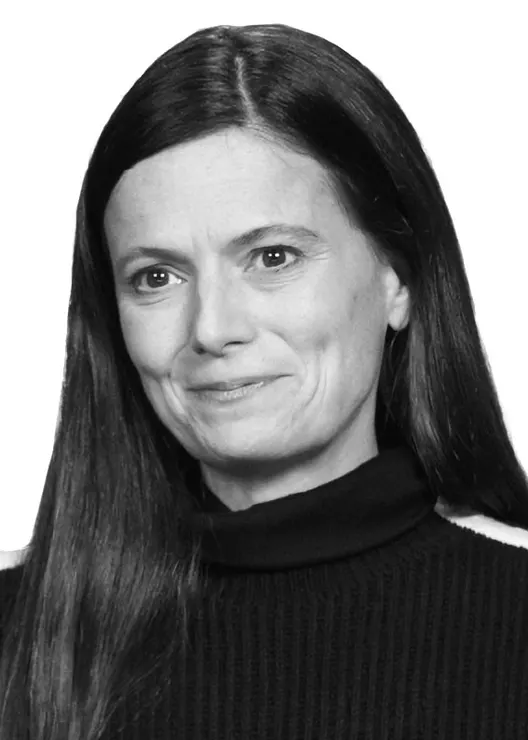
1. Business Role
Her CFO tenure covers Microsoft's shift from a comparatively asset-light software licensing model toward a company spending enormous amounts on:
- global cloud infrastructure;
- AI compute;
- acquisitions;
- datacenter capacity.
She is therefore best understood as a capital allocator and financial operator inside Microsoft's platform transformation.
Hood's role is:
capital allocator
+
acquisition execution leader
+
infrastructure-finance operator
The CFO of a packaged-software company can focus heavily on:
- operating expenses;
- cash;
- shareholder returns.
The CFO of a hyperscale cloud / AI company also has to plan:
- datacenters;
- long-lived assets;
- power contracts;
- hardware capacity;
- major acquisitions.
Microsoft's change in capital intensity makes Hood central to understanding how strategy became financially executable.
2. The Business She Inherited
Hood became CFO in 2013, before Nadella became CEO.
Microsoft still had enormous:
- Windows;
- Office;
- enterprise software;
- cash generation.
But the company was entering a transition.
Cloud required Microsoft to move from:
customer buys servertoward:
Microsoft buys server
customer rents capacity
That changes the balance sheet.
The company has to spend capital before future cloud revenue arrives.
3. Business Thesis
Public evidence supports several durable capital-allocation patterns during Hood's tenure.
Thesis 1 — Fund the cloud transition before all demand is monetized
Business implication
Build datacenter capacity in advance.
Where it showed up
Azure and Microsoft Cloud infrastructure spending.
The risk is underutilized capacity.
The opposite risk is being unable to serve demand.
By 2026 Microsoft was still reporting capacity constraints in some cloud / AI workloads. [S3]
Thesis 2 — Acquisitions can buy strategic networks, not only product revenue
Business implication
Use M&A to acquire:
- professional network;
- developer network;
- content ecosystem.
Where it showed up
LinkedIn, GitHub and Activision Blizzard.
Hood's official biography specifically notes leadership involvement in these acquisitions. [S9]
Thesis 3 — Capital returns and strategic investment have to coexist
Microsoft continued:
- dividends;
- share repurchases;
while simultaneously increasing infrastructure investment.
The CFO has to decide how much capital remains available for:
- growth;
- M&A;
- shareholder distributions.
Thesis 4 — AI changes the required physical capital behind software economics
Business implication
Financial planning must account for:
- GPUs;
- datacenters;
- power;
- leases;
- depreciation.
AI is not merely an R&D line item.
It is an infrastructure program.
4. Strategic Bets
Strategic Bet 1 — Finance Azure infrastructure scale
THE PROBLEM
Cloud demand requires Microsoft-owned or controlled infrastructure.
THE BET
Commit large amounts of capital to datacenters.
THE RESULT
Azure surpassed $100 billion annual revenue in FY2026. [S2]
THE BUSINESS IMPACT
Microsoft became much more capital intensive while building recurring consumption revenue.
Strategic Bet 2 — LinkedIn acquisition
Strategic Bet 3 — GitHub acquisition
THE BET
Spend $7.5 billion for the world's major developer collaboration platform. [S18]
THE MECHANISM
Increase Microsoft relevance across developers and open-source ecosystems.
THE RESULT
GitHub later became a major distribution platform for Copilot.
Strategic Bet 4 — Activision Blizzard acquisition
THE BET
Commit $75.4 billion to gaming content and mobile scale. [S22]
THE MECHANISM
Add major franchises and studios to Xbox / Game Pass distribution.
THE RISK
Large acquisition integration, content cycles and regulatory review.
THE BUSINESS IMPACT
Microsoft materially increased first-party gaming content.
Strategic Bet 5 — AI infrastructure
THE PROBLEM
Generative AI requires much more compute than traditional SaaS.
THE BET
Accelerate infrastructure spending even while near-term capacity and margins are pressured.
THE RESULT
Microsoft 365 Copilot, GitHub Copilot and Azure AI scaled rapidly, while Microsoft Cloud gross margin was pressured by AI infrastructure. [S1][S2]
5. How Those Bets Changed the Business
Capital structure
software R&D-heavy
↓
software + huge physical infrastructure
Acquisition portfolio
software products
↓
networks + communities + content
Revenue durability
license cycles
↓
subscription + consumption + long-term contracts
Risk
New risks increased:
- datacenter utilization;
- electricity availability;
- GPU supply;
- acquisition integration.
6. Resource Allocation
Hood's tenure has included capital directed toward:
Datacenters and AI
Microsoft's FY2026 10-K shows sharply rising property and equipment and large future commitments. [S1]
M&A
LinkedIn, GitHub and Activision Blizzard represent more than $100 billion of disclosed acquisition purchase price combined. [S18][S20][S22]
Internal R&D
FY2026 R&D expense reached $35.562 billion. [S1]
Shareholder returns
Microsoft continued dividends and repurchases.
The CFO role has therefore balanced:
growth investment
+
acquisition
+
operating spending
+
capital returns
7. Business Model: Before vs. After
| Dimension | Microsoft around 2013 | Microsoft in 2026 |
|---|---|---|
| Capital base | Software / device-oriented | Hyperscale datacenters + AI |
| Revenue | More license-heavy | Subscription + consumption |
| M&A | Product / category | Networks + developer ecosystem + gaming content |
| Infrastructure risk | Lower | Very high |
| Cloud capacity | Emerging | Strategic bottleneck |
| AI cost | Minimal | Major capex / compute requirement |
8. What Worked / What Didn't
WHAT WORKED — Funding cloud scale
Azure became a major revenue engine.
WHAT WORKED — LinkedIn and GitHub became strategic distribution assets
Both acquisitions expanded Microsoft beyond conventional software categories.
CONSTRAINT — AI infrastructure pressures margins and cash requirements
Microsoft Cloud gross margin declined partly because of scaling AI infrastructure. [S1]
CONSTRAINT — Capacity planning remains difficult
Demand can exceed available capacity, but building too much too early creates utilization risk.
CONSTRAINT — Large acquisitions require long-term integration
A large purchase price does not automatically create strategic value.
Gaming content and network acquisitions require continued product / distribution execution.
9. Business Legacy
Hood's tenure illustrates a structural change in software-company finance.
Microsoft moved from a business where most capital was human and intellectual toward one where competitive advantage also requires:
land
+
power
+
datacenters
+
GPUs
+
networking
The CFO became part of the technology-capacity strategy.
That is the core commercial significance.
Career Background
Hood joined Microsoft in 2002 and held leadership roles in finance before becoming CFO in 2013. [S9]
Her official biography identifies responsibilities spanning finance, acquisitions, business development, real estate and treasury.
Career Timeline
Common Misconceptions
"The CFO only reports financial results."
No.
Microsoft's CFO organization is deeply involved in capital allocation, M&A, real estate and infrastructure planning. [S9]
"Cloud improved Microsoft without requiring major capital."
No.
Cloud shifted large amounts of infrastructure ownership toward Microsoft.
"The acquisitions were Nadella's work alone."
Too simple.
Major corporate transactions are organizational decisions involving finance, boards, legal, product and operating teams.
Evidence
- Hood has served as CFO since 2013 and joined Microsoft in 2002. [S9]
- Her official responsibilities include acquisitions, business development, FP&A, real estate, tax and treasury. [S9]
- Microsoft's FY2026 10-K documents rapidly rising infrastructure investment. [S1]
- LinkedIn, GitHub and Activision Blizzard had disclosed purchase prices of $27.0B, $7.5B and $75.4B. [S18][S20][S22]
- Microsoft's cloud / AI capacity remains constrained by physical infrastructure. [S1][S3]