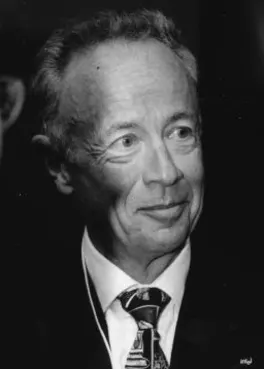
1. Business Role
Grove joined Intel immediately after Noyce and Moore founded the company. [S7]
Where Noyce shaped culture and Moore shaped technology cadence, Grove became the execution system.
Intel's later reputation for intense operational management is closely associated with him.
2. The Business He Inherited
Intel had been founded around memory.
By the 1980s, Japanese memory manufacturers were putting severe pressure on the business.
Intel faced a classic strategic trap:
historic core business
=
large sunk investment
+
organizational identity
+
weakening economics
The company had to decide whether to defend the old core or move resources elsewhere.
3. Business Thesis
Grove's operating philosophy emphasized confronting reality before it became unavoidable.
The memory exit reflected that mindset.
Intel asked what a new management team would do if it took over the company.
The answer was to leave commodity memory and focus on microprocessors.
4. Strategic Bets
Microprocessor focus
This was the defining bet.
IBM-compatible ecosystem
Intel reinforced x86 as the processor architecture underlying a rapidly expanding PC ecosystem.
Manufacturing execution
Product leadership required process technology to remain on schedule.
High-intensity management
Objectives, measurement and direct debate became cultural tools.
5. How Those Bets Changed the Business
The shift transformed Intel from:
memory manufacturerinto:
processor architecture company
+
leading-edge manufacturer
This produced much higher strategic differentiation.
6. Resource Allocation
The key capital-allocation decision was not an acquisition.
It was what Intel stopped funding.
Exiting memory allowed engineering and manufacturing investment to concentrate on microprocessors.
That is why portfolio subtraction can be as important as expansion.
7. Business Model: Before vs. After
Before
commodity memory
competition on cost / manufacturing
After
x86 architecture
+
software compatibility
+
brand
+
manufacturing
The second model generated a much stronger ecosystem moat.
8. What Worked / What Didn't
The microprocessor strategy created extraordinary value.
But later Intel became vulnerable to the opposite problem: success made the company increasingly dependent on x86 PCs and servers.
The strategic lesson is not that one pivot solves the company forever.
It is that technology companies must keep reassessing the core.
9. Business Legacy
Grove's legacy is execution under strategic pressure.
Modern Intel's turnaround again asks the same question:
Which capabilities are truly core, and where must the company stop spending simply because it spent there before?