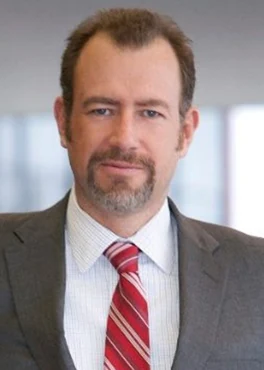
1. Business Role
Ammann's current remit concerns the development and performance of ExxonMobil's upstream portfolio. It connects resource priorities, project execution, operating performance and commercial outcomes across locations with different geological and contractual conditions.
His earlier Low Carbon Solutions responsibility involved building commercial opportunities around capabilities such as carbon transport and storage. The distinction matters: leading a developing service business and leading established resource operations require different operating measures. One role should not be used as shorthand for both periods. [S34]
2. The Business He Inherited
At Low Carbon Solutions, Ammann entered an organization seeking to turn existing technical capabilities into larger third-party industrial offers. A technically credible concept still needed customers, infrastructure, permissions and commercial terms.
At Upstream in 2025, he inherited established projects and a portfolio already enlarged by Pioneer. Those assets were not created when he arrived. His task was to lead their continuing development and performance, not to claim personal discovery of the resources or sole authorship of the prior acquisition. [S33][S34]
3. Business Thesis
The documented Low Carbon approach emphasized applying existing engineering and subsurface capabilities to industrial emissions problems. His historical interview described the need to move from announcements toward real projects and workable economics. Those were his stated views, not independent evidence that all proposed benefits had already occurred. [S35]
The broader business interpretation is coordination: technical assets become valuable when connected with demand and delivery. The same principle applies in Upstream, although the customer products, investment cycles and operating risks differ substantially from an emerging carbon-management service.
4. Strategic Bets
During his Low Carbon period, the company pursued customer arrangements, Denbury and prospective lithium supply relationships. The Denbury agreement added a network-based route for serving industrial customers; the lithium memoranda addressed a different materials opportunity. [S30][S49][S50]
These were company decisions involving other executives and teams. The evidence supports leadership-level association with that work, not a claim that Ammann personally negotiated every clause or invented the underlying technologies.
His Upstream appointment then placed him over a larger established portfolio, where executing existing projects is as important as announcing new opportunities.
5. How the Bets Changed the Business
The carbon-management proposition gained a physical network and specific customer connections. CF's 2025 startup and subsequent NG3 and Nucor operations show that parts of the service reached operation after the earlier development period. [S19][S54][S70]
That later progress belongs to the company and successor teams as well as earlier work. It should not be credited entirely to an executive who had moved to another role.
Lithium followed a different path. Pilot production and nonbinding customer interest did not establish a fully operating commercial franchise, and current scale wording differs from the original ambition. [S48][S50]
6. Resource Allocation
The earlier role required choosing where to deploy engineering, commercial effort and project spending before new services had mature revenue. Denbury added existing infrastructure, while other projects required building demand and a complete operating chain.
The Upstream role involves a different allocation problem: balancing development opportunities, sustaining existing production and coordinating capital-intensive projects. Production growth alone is not a complete measure if the additional volume requires unattractive capital or operating costs.
Public reporting does not identify a personal budget assigned by Ammann to every project. The useful assessment concerns the priorities and operating responsibilities the record actually establishes.
7. Before and After
The chronology provides two distinct observations. Ammann joined the lower-carbon organization in 2022; by 2025 he had moved to Upstream, while several industrial projects were progressing toward startup. [S34]
In 2026, Golden Pass reached first export cargo, a milestone in a project developed over many years. Its timing during his Upstream leadership is relevant, but not proof that he originated the entire project or that all trains were already complete. [S52]
The comparison should follow actual stages, not assume every later milestone was already delivered when an early agreement was signed.
8. What Worked and What Did Not
Actual customer startups demonstrate progress beyond concept and contract. The upstream portfolio also continued to produce and develop resources under his current leadership. Those outcomes support concrete observations, not a universal claim that every initiative succeeded. [S2][S3][S19]
The Baytown hydrogen pause shows a material limitation in the broader lower-carbon strategy. It illustrates the importance of market demand and commercial conditions, rather than proving every technology in the organization failed. [S18]
The evidence does not establish personal fault for every delay. Leadership accountability concerns choices and responses within the role, with responsibility shared across a large organization.
9. Legacy and Continuing Test
Ammann's contribution is associated with bringing commercial and organizational leadership to different kinds of industrial businesses. The recurring test is whether existing capabilities can be assembled into dependable, economically useful customer offers.
His current Upstream tenure is still relatively recent. A mature assessment cannot treat future production plans or all historical assets as completed personal achievements.
The meaningful record will be operating performance, disciplined capital use and the ability to move projects through their actual constraints. Titles and announcement volume alone cannot demonstrate those outcomes.
Timeline and Context
Earlier finance and automotive roles preceded ExxonMobil. Low Carbon Solutions came first within the company, followed by the February 2025 Upstream appointment. The official appointment release also records the separate appointment of Barry Engle to Low Carbon Solutions. [S34][S67]
That succession prevents a common attribution error: an old quotation identifying Ammann as Low Carbon president is historical evidence, not the current leadership register.