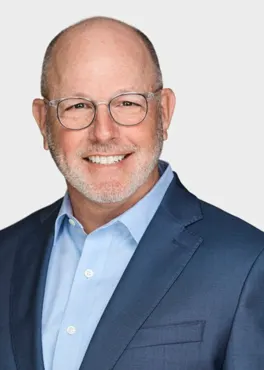
Business Role
restoring operating discipline after Aetna margin pressure, using his Caremark background to simplify pricing/benefits and building a technology-powered consumer layer
Business Context
Joyner became CEO in October 2024 after leading CVS Caremark and became Chair in January 2026.
Strategic Bets
reprice Aetna
- strengthen PBM/client transparency
- launch Health100
- improve enterprise execution
- balance integration with partner choice
Why the Decisions Matter
CVS is a portfolio of risk, service and retail businesses. Leadership decisions determine capital allocation, insurance pricing, PBM contracts, pharmacy economics, care-delivery growth and enterprise technology. These choices can take years to show results.
Strategic Tension
integration must create real savings rather than internal profit shifting
Capital Allocation
Leadership balances debt, dividends, insurance capital, technology, pharmacy investment, care delivery and acquisitions. Large health acquisitions can create goodwill/intangible risk if expected margins fail to materialize.
What to Watch
whether Aetna margin recovery is durable and Health100 becomes a genuine engagement layer
Evidence
Deeper Business Analysis
Joyner's Caremark background makes PBM/client economics central to his operating lens. The 2025–2026 turnaround emphasizes execution, pricing discipline and simplification more than another large acquisition cycle. His key test is whether margin recovery can coexist with improved consumer/provider trust.
Decision Scorecard
Evaluate leadership through operating outcomes: pricing accuracy, member/client retention, capital return, care quality, debt, free cash flow and whether integrations reduce total friction. Stock price alone is not a sufficient operating scorecard.
The Turnaround Mandate
Joyner's first job was not to invent a new corporate structure.
It was to stabilize economics inside the structure CVS had already built.
The key problem was Aetna medical-cost performance.
A vertically integrated company cannot create strategic credibility if its insurance engine is mispriced.
Joyner therefore emphasized:
- pricing discipline;
- operating simplification;
- better execution;
- restoring confidence with plan clients and investors.
Why His Caremark Background Matters
Joyner spent years inside the PBM business.
That gives him direct experience with one of CVS's most scrutinized economic interfaces: how employers, manufacturers, pharmacies and members share drug cost.
TrueCost and broader transparency initiatives therefore fit his operating background.
Capital Allocation Scorecard
Joyner inherited substantial acquisition-related capital commitments.
His return hurdle is not only earnings growth.
He must show that:
- Oak Street scales toward attractive mature economics;
- Signify creates downstream value;
- Aetna margins normalize;
- debt/cash generation improve;
- Health100 does not become a costly distraction.
What Would Falsify the Strategy
Warning signs would include:
- renewed HCB medical-cost miss;
- major PBM client losses;
- continued care-delivery impairments without improvement;
- weak Health100 adoption;
- inability to reduce leverage while funding investment.