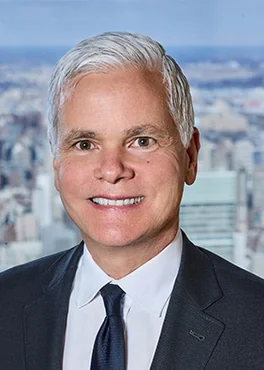
1. Business Role
Petno oversees a business encompassing Global Banking, Markets, Payments and Securities Services. These activities connect lending and advice with transaction infrastructure and institutional capabilities. [S54]
The leadership task is not simply increasing the number of products offered to each client. It is matching resources and capabilities to genuine needs while maintaining credit discipline and clear responsibility.
His company co-president role adds enterprise scope, but it does not erase the separate responsibilities of other business leaders or the continuing authority of the group CEO.
2. The Business He Started or Inherited
Commercial Banking was already a substantial business when Petno became its CEO. He did not create corporate lending or start JPMorgan Chase from scratch.
His official biography describes expansion in the United States and the international development of a mid-cap business. That history involves extending an established model into more relationships and markets, not merely inventing a new product name. [S54]
The later integrated CIB brought another inherited challenge: clients and capabilities previously organized through different divisions needed a more coherent operating connection without losing specialized knowledge.
3. Business Thesis
The commercial logic is that a business relationship can grow beyond one loan. A company may need operating accounts and payments before later needing acquisition finance, capital-markets access or more complex treasury support.
The integrated model tries to make those capabilities available through a coordinated relationship rather than forcing the client to navigate unrelated internal organizations.
That logic does not justify lending at any price to win other business. Credit, capital and service economics still have to work for the actual customer and transaction. Integration creates a possibility, not automatic profitability.
4. Strategic Bets
One documented area is geographic expansion of relationship banking, including the international mid-cap effort described in Petno's biography. It extends a customer model into additional markets while requiring relevant local execution. [S54]
A second is organizational integration. The joint 2025 CIB letter explains the combination of Commercial Banking and the former Corporate & Investment Bank as a strategic move intended to connect client capabilities. [S57]
A third is investment in technology and delivery across the combined business. The commercial purpose is to make customer interactions and internal processes more useful, not to count an organizational merger as if every integration benefit had already been achieved.
5. How the Bets Changed the Business
The combined CIB can connect a corporate customer with payments, financing, advice and institutional services under a broader operating structure. That changes the opportunity to coordinate relationships across a client's development.
It also changes the management problem. A loan officer's view of a relationship is not the same as the full picture of capital, trading, deposit and operational exposures.
Successful integration therefore requires information and incentives that support the whole relationship. Merely moving businesses onto one chart does not guarantee better service or an appropriate aggregate risk position.
6. Resource Allocation
Corporate relationships can require people, technology, lending capacity and other financial resources. Some commitments use capital even before a customer draws the full available financing.
A leader must decide where to expand coverage and which opportunities justify scarce balance-sheet capacity. More clients or larger commitments are not unqualified achievements if their risk-adjusted economics deteriorate.
The same discipline applies to operating investment. A shared platform can reduce duplicated work, but migration and controls cost money before the service becomes simpler for clients or employees.
7. Before and After
Petno's earlier Commercial Banking role focused on that franchise; the later Global Banking and CIB responsibilities expanded the range of capabilities under his management. The June 2026 change made him sole CIB CEO rather than preserving the former co-CEO structure. [S54][S5]
The reporting structure also changed in 2024 when the former businesses were combined. Comparing old and new division totals requires a consistent perimeter rather than treating a reorganization as wholly new revenue. [S1]
His record consequently includes both long-term relationship expansion and a more recent integration mandate. They should not be compressed into one identical period of sole authority.
8. What Worked and What Did Not
The company reported strong 2025 CIB results and the joint letter described expanded client activity. Those outcomes support examination of the combined franchise, while market conditions, multiple leaders and many teams also contributed. [S1][S57]
Control quality provides an important limit to any celebratory account. The Federal Reserve's March 2024 action found inadequate monitoring of firm and client trading activity during 2014–2023 and required corrective work. [S60]
That was a firm-level finding, not a finding that Petno personally directed every historical failure. It still identifies a real weakness relevant to leading a broader business containing market activity: customer breadth and revenue growth cannot replace effective surveillance and data controls.
9. Legacy and Continuing Questions
Petno's continuing test is whether the integrated model produces useful, sustainable relationships rather than more internal complexity. That requires coordinated coverage, disciplined credit and dependable operating capabilities.
His promotion does not resolve future group succession. Jamie Dimon remains chairman and CEO, while Troy Rohrbaugh has a different business mandate. Evaluating present authority is more meaningful than assuming a future appointment already occurred. [S5]
Business Context
J.P. Morgan Payments illustrates the recurring transaction side of corporate relationships. Markets adds different intermediation and capacity questions. Their connection is useful only when actual responsibilities remain understandable.
Business Timeline
The relevant sequence runs from Commercial Banking leadership in 2012, through the 2024 integration period and 2025 CIB co-leadership, to sole CIB authority and the co-president appointment in June 2026. [S54][S1][S5]
Common Misconception
The title “co-president” does not mean Petno is already the sole group CEO. Nor does serving corporate clients mean every business inside the CIB is simply a commercial loan portfolio. The combined activities have different funding, fee and risk characteristics.