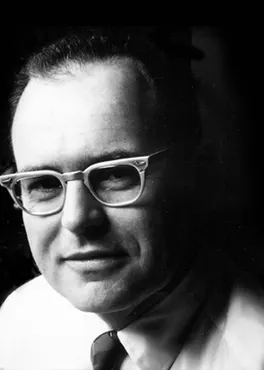
1. Business Role
Moore was the technical architect of Intel's early culture.
Before Intel, he worked at Fairchild Semiconductor and had already articulated the observation later called Moore's Law. [S7][S10]
At Intel he helped create a company willing to spend continuously on new process technology.
2. The Business He Started
Intel was originally founded around semiconductor memory.
The early thesis was not:
build PC processorsIt was:
use new semiconductor technology
+
manufacture complex general-purpose chips at scale
That model later made the microprocessor opportunity possible.
3. Business Thesis
Moore's Law became more than a forecast.
It created a planning cadence.
If transistor density would keep increasing, Intel needed to coordinate:
process R&D
fab investment
product architecture
software ecosystem
customer roadmaps
This became a self-reinforcing industry expectation.
4. Strategic Bets
Semiconductor memory
Intel's first large commercial success came from memory.
Microprocessors
The company later shifted toward microprocessors when Japanese competitors made memory economics less attractive.
Continuous process investment
Intel repeatedly funded new fabs and process generations before the previous generation had fully matured.
That willingness to cannibalize existing technology became central to leadership.
5. How Moore's Law Changed the Business
Moore's Law encouraged a recurring promise:
more transistors
↓
more performance / capability
↓
roughly similar or better economics per function
↓
new applications
↓
more semiconductor demand
The principle shaped not just Intel but customer expectations across computing.
6. Resource Allocation
Moore's Intel was unusually willing to reinvest into manufacturing technology.
That decision created barriers to entry because leading-edge semiconductor manufacturing requires enormous cumulative knowledge and capital.
7. Business Model: Before vs. After
Intel's early memory business depended on manufacturing leadership.
The microprocessor business added a second layer:
manufacturing leadership
+
architecture compatibility
+
software ecosystem
That combination became much more defensible than commodity memory alone.
8. What Worked / What Didn't
The great success was turning transistor scaling into repeated platform transitions.
The long-run weakness was that the industry eventually became more modular.
Fabless designers could use independent foundries.
Intel no longer had exclusive access to the best manufacturing economics simply because it owned fabs.
9. Business Legacy
Moore's legacy is visible in modern Intel's biggest challenge.
The company is still trying to make manufacturing innovation and product innovation reinforce one another.
Intel 18A is, in many ways, a modern test of the old Moore-era operating model.