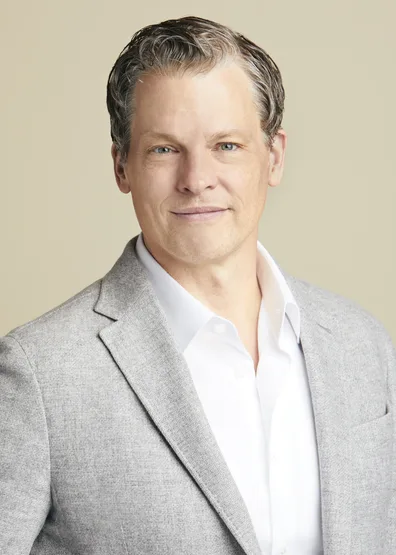
1. Business Role
Peters has worked across:
product
operations
advertising
games
AI
The useful business question is:
How did Netflix turn a streaming technology into a product that could operate globally, monetize at different price points and keep expanding into new entertainment categories?
Peters' role is easiest to understand as the bridge between:
how the customer actually gets, discovers and pays for it
A streaming business can have excellent content and still fail if:
- it does not work on enough devices;
- pricing is wrong;
- discovery is poor;
- international launches are weak;
- advertising is badly integrated;
- new products add friction.
Peters' career inside Netflix has repeatedly sat around those product and operating problems.
2. The Business Peters Joined
Peters joined Netflix in 2008, only shortly after streaming had launched.
At that point Netflix was still living in two worlds:
DVD subscription
+
early-stage streaming
The streaming product needed:
- device distribution;
- internet partnerships;
- international expansion;
- product quality;
- scalable technology.
Netflix was not yet globally available.
It had no ad plan.
It had no games business.
Original content was still years away.
Peters therefore joined before the modern streaming model had been operationally proven.
3. Business Thesis
Thesis 1 — Great content has limited value if the product is hard to access
Peters spent years in streaming partnerships and device distribution.
Business implication
Make Netflix available across the devices and platforms people already use.
Where it showed up
Consumer-electronics partnerships, ISP partnerships and integration across TVs and other devices. [S30]
Thesis 2 — A global product needs local operations
Peters led international development efforts before becoming CPO. [S30]
Business implication
Global scale requires more than translating the interface.
It needs:
- local payment;
- local pricing;
- local partnerships;
- local content;
- local product adaptation.
Thesis 3 — Monetization should expand customer choice
Peters was the executive who announced Netflix's first ad-supported plan and Microsoft ad-tech partnership. [S7]
Business implication
Do not force every customer into one willingness-to-pay level.
Use a lower-priced ad-supported plan to reach consumers who value price more than an ad-free experience.
Thesis 4 — Product expansion should reuse the membership relationship
Games, live and other formats can be more efficient if they live inside the existing Netflix relationship rather than requiring separate accounts and payments.
Business implication
Use one membership to serve more entertainment jobs.
4. Strategic Bets
Strategic Bet 1 — Device and platform partnerships
THE PROBLEM
Streaming only works as a mass-market product if people can watch conveniently on living-room screens and other devices.
THE BET
Build partnerships across consumer electronics, ISPs and video distributors.
THE MECHANISM
Reduce the number of steps between the member and Netflix.
THE RISK
Netflix had to depend on outside platforms and negotiate distribution while preserving the direct member relationship.
THE RESULT
Netflix became widely integrated across internet-connected devices.
THE BUSINESS IMPACT
website-based service
→
widely distributed television product
Strategic Bet 2 — International operations
THE PROBLEM
A U.S.-designed product cannot simply be copied into every market without adaptation.
THE BET
Build local operations and partnerships while keeping one global platform.
THE MECHANISM
Combine common technology with local execution.
THE RESULT
Netflix became available in more than 190 countries after its major 2016 expansion. [S9]
THE BUSINESS IMPACT
Distribution scale became global.
Strategic Bet 3 — Advertising
THE PROBLEM
A subscription-only model leaves out consumers with lower willingness to pay and ignores a major entertainment revenue pool.
THE BET
Launch a lower-priced ad-supported plan.
THE MECHANISM
lower member price
+
advertiser revenue
can create competitive economics at a different price point.
THE RISK
Ads could damage the viewing experience, weaken the premium brand or fail to build enough advertiser scale.
THE RESULT
Netflix launched the plan in 12 countries in 2022, built its own Ads Suite, and projected about $3 billion of advertising revenue for 2026. [S7][S12][S2]
THE BUSINESS IMPACT
one payer
→
two payer groups
Strategic Bet 4 — Games inside membership
THE PROBLEM
Netflix competes for leisure time beyond television and film.
THE BET
Include games in the Netflix membership.
THE MECHANISM
Use the same subscription, IP, recommendations and device relationships to expand entertainment hours.
THE RISK
Games have different development, discovery and engagement mechanics from video.
THE RESULT
Netflix moved from mobile games toward cloud TV games, including phone-as-controller experiences. [S16][S2]
THE BUSINESS IMPACT
Netflix's product boundary extends from watching toward playing.
Strategic Bet 5 — AI in product and operations
THE PROBLEM
Netflix has to improve discovery, creative workflows, advertising and product development at global scale.
THE BET
Use AI across:
- search and discovery;
- ads;
- production tools;
- engineering workflows.
THE RESULT
By Q2 2026 management described AI as a cross-company tool while emphasizing that creators remain central to entertainment. [S2]
THE BUSINESS IMPACT
AI is becoming an operating layer rather than one standalone feature.
5. How Those Bets Changed the Business
Distribution
browser
→
TVs + devices + ISP / MVPD integrations
Geography
U.S.
→
190+ countries
Monetization
subscription only
→
subscription + advertising
Product boundary
watch
→
watch + live + play
Operating model
founder CEO
→
co-CEO structure pairing content and product / operations
6. Resource Allocation
Peters' leadership period is visible in spending and management attention toward:
Product
- television and mobile interfaces;
- recommendations;
- search;
- plan design.
Advertising
- first-party Ads Suite;
- ad sales;
- DSP integrations;
- measurement.
Games
- cloud-game infrastructure;
- first-party / partner game development;
- TV play.
International operations
- local partnerships;
- distribution;
- product localization.
AI
- product discovery;
- advertising;
- engineering and production tools.
7. Business Model: Before vs. After
NETFLIX WHEN PETERS JOINED
Revenue Subscription
Distribution DVD + early streaming
Geography Limited international presence
Product Watch film / TV
Monetization Member fee
NETFLIX UNDER CURRENT CO-CEO MODEL
Revenue Subscription + rapidly growing advertising
Distribution Global streaming across devices
Geography Global
Product Watch + live + games + broader entertainment
Monetization Member fees + advertisers + smaller other sources
8. What Worked / What Didn't
WHAT WORKED — Global device distribution
Netflix became a default application on an enormous range of consumer devices.
That reduced friction and helped turn streaming into a normal TV behavior.
WHAT WORKED — Ads
The ad-supported tier expanded rapidly enough that Netflix projected roughly $3 billion of ad revenue in 2026. [S2]
STILL UNPROVEN — Games
Netflix's games strategy is expanding, but management still describes the base as small. [S2]
The question is not whether Netflix can launch games.
It is whether games can materially increase:
- acquisition;
- retention;
- engagement;
- membership value.
DIDN'T GO AS PLANNED — Warner Bros. acquisition
Sarandos and Peters jointly said Netflix would not raise its Warner Bros. offer because the price required to match Paramount Skydance's proposal was no longer financially attractive. [S23]
What this reveals
The current management team is willing to consider large-scale inorganic content expansion but says it will apply return discipline.
9. Business Legacy
Peters' long-term legacy is still being built.
The structural pattern so far is:
global streaming distribution
→
product leadership
→
advertising monetization
→
interactive expansion
→
AI-enabled operating model
His role is complementary to Sarandos.
Sarandos has deep entertainment / content responsibility.
Peters brings a long operating history in:
- technology;
- partnerships;
- international scale;
- product;
- monetization.
That complementarity is the logic behind Netflix's post-founder co-CEO model.
Career Background
Before Netflix, Peters worked at Macrovision Solutions, Mediabolic, Red Hat Network and Wine.com.
He studied physics and astronomy at Yale. [S30]
The relevant business pattern is that his career combines:
technology
+
consumer electronics
+
digital distribution
which fits the product problems Netflix faced during streaming expansion.
Career Timeline
Joins Netflix.
Works in streaming partnerships and international development.
Becomes Chief Product Officer. [S30]
Becomes COO in addition to CPO. [S22]
Announces Netflix's ad-supported plan and Microsoft ad-tech partnership. [S7]
Becomes co-CEO alongside Ted Sarandos. [S5]
Ads Suite, games, live, AI and new monetization become larger strategic priorities.
Common Misconceptions
"Greg Peters is Netflix's technology-only CEO."
Too narrow.
His roles have also included international growth, partnerships, operations, advertising and business strategy.
"Ted Sarandos makes content decisions while Greg Peters only runs the app."
Too simple.
The co-CEOs have different histories, but Netflix is run jointly and major strategy crosses content, product and finance.
"Ads were a separate business added outside Netflix."
No.
The ad model is integrated into Netflix plan architecture, content, product and measurement.