1. Business Role
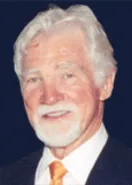
As co-founder and long-serving CEO, Sanders helped establish AMD as a semiconductor operating company rather than a single-product project. His responsibilities spanned customers, products, manufacturing and the resources required to remain competitive over successive technology cycles.
The university's historical award record describes the company's movement from second sourcing toward a more differentiated manufacturer. That record concerns his leadership period and should not be used to claim a historical ranking remains current. It supports the direction of change, not sole authorship of every chip produced during his tenure. [S50]
2. The Business He Started
AMD began in 1969, long before the current AI-accelerator and rackscale markets. The challenge was building a viable semiconductor supplier with products customers would qualify and purchase, manufacturing capable of delivering them and sufficient resources to fund future development. [S58]
Second sourcing could provide an initial commercial role, but dependence on another supplier's product position limited differentiation. Developing competitive proprietary products introduced a larger opportunity and a larger burden: AMD needed its own engineering progress, market acceptance and production execution rather than relying only on availability as an alternative source.
3. Business Thesis
The observable direction was to make AMD a credible differentiated competitor while retaining the ability to deliver manufactured products. The later K6, Athlon and Duron businesses illustrate the importance of product execution and acceptance rather than second-source status alone. [S66][S67]
The business interpretation is that competing required both a reason for customers to choose AMD and the operating capacity to fulfill that choice. This does not establish a private motive or one unchanged strategy over more than three decades. The product mix and industry conditions evolved substantially during Sanders' tenure.
4. Strategic Bets
Competing Through Differentiated Processors
Moving beyond second sourcing gave customers a reason to choose AMD's own products. By the end of Sanders' CEO period, Athlon and Duron unit sales, pricing and market acceptance were central to the company's operating discussion. [S50][S66]
The bet required more than producing a technically distinct chip. Customers needed supporting motherboards and chipsets, supply in useful volumes and a proposition attractive enough to survive a competitor's pricing response. Differentiation created an opportunity; it did not make the supporting ecosystem or competitive pressure disappear.
Funding the Capacity to Manufacture the Products
AMD's manufacturing commitments included the Dresden Fab 30 technology transition and memory-related facilities operated through its Fujitsu relationship. Engineering and production capability had to develop together. [S66]
The commercial benefit was the ability to supply the products the company designed. The exposure was committing resources before demand and yields were fully known. Capacity could be valuable in a strong market and burdensome in a downturn; it was not a cost that automatically fell with each lost order.
Operating More Than One Semiconductor Business
Sanders' AMD included PC processors, memory and other integrated-circuit activity. Those products connected the company with different customers and demand cycles, rather than reproducing today's three-segment computing portfolio. [S66]
That breadth could not guarantee an offset when one market weakened. In 2001, PC processor sales grew while memory and other product sales fell. The outcome exposed the limits of treating a strong processor franchise as protection for the entire manufacturing company.
5. How the Bets Changed the Business
AMD developed a recognized processor franchise with its own product performance and customer-acceptance challenges. The Athlon-era record demonstrates that the company could compete through differentiated products rather than only by offering an additional source. [S67]
The corresponding business was capital-intensive and exposed to technology transitions, utilization and pricing. A product gain could improve sales while a downturn elsewhere reduced overall results. The operating system combined engineering and manufacturing risk in a way that differs from AMD's later predominantly fabless structure.
That distinction matters because later changes should not be read backward into the founding era. The company he led owned and operated responsibilities that subsequent leaders would restructure.
6. Resource Allocation
Resources had to support processor development, production capability and a broader semiconductor portfolio. The 2001 annual discussion identifies manufacturing transitions and customer acceptance alongside pricing and inventory exposure. [S66]
Those choices required committing capital and engineering before the final market outcome was known. A factory could not instantly disappear when demand weakened, and a product transition needed infrastructure from third parties as well as AMD's own work.
The public record supports this allocation problem without revealing every individual boardroom decision. It would be misleading to invent a precise personal spending rationale for Sanders where the source only documents company obligations and results.
7. Business Model: Before vs. After
| Dimension | Early company position | Position by the end of his CEO tenure |
|---|---|---|
| Customer proposition | A new supplier, including second-source products | Differentiated processor families with their own acceptance and pricing challenges |
| Required capabilities | Establish products, customers and supply | Sustain engineering, manufacturing transitions and a wider installed ecosystem |
| Business exposure | Survival of a young semiconductor company | Demand, pricing and factory commitments across several product markets |
The structural achievement was building a company that could compete through its own products and deliver them at scale. The Athlon-era operating record and the 2001 reversal show both the capability and the continuing exposure it carried. [S50][S58][S66][S67]
8. What Worked and What Did Not
The development of an enduring processor business and movement beyond second sourcing are meaningful achievements. They were not a guarantee of stable profitability or insulation from a much larger competitive environment.
The 2001 report describes pricing pressure, customer inventory and manufacturing-transition requirements. Total sales declined 16% from 2000, even though PC processor sales increased 4%. Those are concrete operating limits in his final CEO period, not a personal scandal or an invented failed invention. [S66]
The manufacturing model created both capability and exposure. It helped make AMD a supplier able to deliver products, while tying resources to facilities and technology transitions whose economics depended on demand and execution.
9. Business Legacy
Sanders' structural legacy is AMD's establishment and development into a differentiated semiconductor competitor. That foundation supported a company later leaders could reshape, but it did not predetermine every subsequent strategy.
His CEO tenure ended in April 2002. The ATI acquisition in 2006, GlobalFoundries formation in 2009 and later Zen and AI-system developments belong to later periods. Giving Sanders credit or blame for all of them would erase the actual chronology. [S48][S49][S51]
Career Background
Sanders earned his electrical-engineering degree from the University of Illinois in 1958. The university's historical account identifies his AMD company-building role and participation in semiconductor industry organizations. These are institutional and business responsibilities, distinct from claiming personal authorship of every processor. [S50]
Career Timeline
- 1969: Co-founded AMD. [S50][S58]
- 2000: AMD's contemporary results documented substantial growth in its differentiated processor business. [S67]
- 2001: Total sales declined despite modest PC processor sales growth, exposing the wider portfolio's cycle. [S66]
- April 25, 2002: His CEO tenure ended; later transactions belong to subsequent leadership periods. [S49]
Common Misconceptions
Sanders was not AMD's only founder, its current CEO or the individual inventor of all its processors. His manufacturing-era company should not be confused with today's predominantly externally manufactured computing portfolio.
Evidence
Founding and historical role: [S10][S49][S50][S58]. Preferred portrait provenance: [S76]. Contemporary operating record: [S66][S67]. Later-event attribution boundary: [S48][S51].