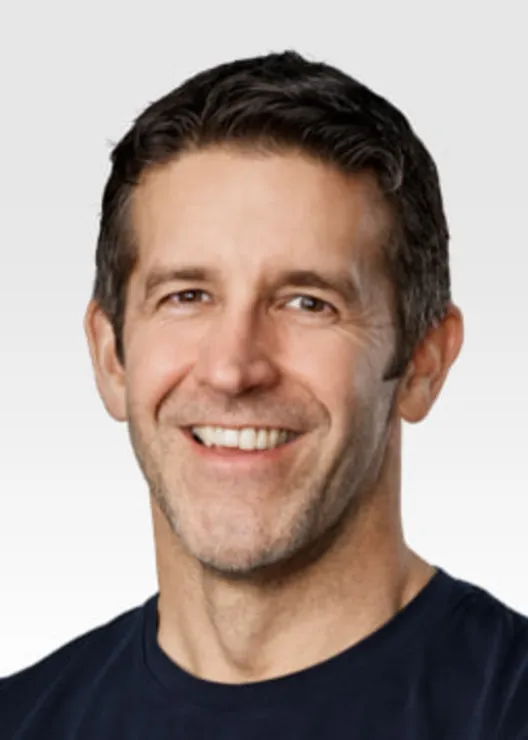
1. Business Role
Ternus's pre-CEO role can be described as:
product-system builder
+
successor CEO
He spent most of his Apple career on the layer between:
mass-produced device
That includes:
- engineering architecture;
- material choices;
- reliability;
- manufacturability;
- durability.
This is commercially important because Apple's brand promise depends on products working at enormous scale.
2. The Business He Inherited
Ternus inherited an Apple that is far broader than the Apple Tim Cook inherited in 2011.
The current business includes:
iPhone
Mac
iPad
Watch
AirPods
Vision Pro
Services
Apple Silicon
Apple Intelligence
It also includes an installed base above 2.5B active devices. [S3]
The inherited company has several structural strengths.
High-margin Services
Services revenue exceeded $109B in FY2025. [S1]
Custom silicon
Apple now controls far more of its processor architecture.
Global brand / distribution
Apple has direct retail plus enormous channel reach.
Installed-base distribution
New software and services can reach existing customers quickly.
But Ternus also inherited several difficult constraints.
Mature device categories
The biggest device categories are large and difficult to grow indefinitely through unit expansion alone.
AI transition
Apple is still building a system-level AI architecture while relying on internal and partner technologies.
Supply-chain dependence
Apple does not control most manufacturing capacity.
Platform regulation
App distribution and payment economics face legal / regulatory change.
CEO succession risk
A long Cook tenure created expectations around continuity.
The first real CEO question is:
Can Ternus preserve Apple's integrated product model while reallocating resources across Services, AI and new device categories?
At the cutoff, there is not enough evidence to answer.
3. Business Thesis
A one-month CEO tenure does not support a fully independent Ternus doctrine.
The supported analysis must come from his long hardware record.
Thesis 1 — Hardware quality is part of business value
Apple's biography highlights Ternus's work around:
- reliability;
- durability;
- materials;
- repairability. [S6]
This matters commercially because premium pricing depends partly on trust.
A device that:
- lasts longer;
- fails less;
- retains value;
- can be repaired more effectively
can strengthen brand economics.
Thesis 2 — Hardware engineering is a cross-product capability
Ternus worked across many product families.
That suggests a company-level operating principle:
one engineering capability
can support
many products
Examples include:
- enclosure methods;
- materials;
- thermal design;
- battery architecture;
- manufacturing quality.
Reuse can improve scale.
Thesis 3 — Product architecture still matters even when Services grow
Apple's board chose a long-tenured hardware engineering leader as CEO.
That does not prove what strategy he will pursue.
But it supports one descriptive conclusion:
Apple still treats integrated physical products as central to the company rather than a legacy business beneath Services.
4. Strategic Bets
Only well-supported pre-CEO or succession-level bets belong here.
Strategic Bet 1 — Reliability and durability as engineering priorities
THE PROBLEM
Premium devices lose value when customers perceive them as fragile, short-lived or difficult to support.
THE BET
Invest engineering resources in:
- reliability;
- materials;
- product longevity;
- repairability.
THE MECHANISM
Better ownership experience can improve:
- customer trust;
- resale value;
- retention;
- warranty economics.
THE RESULT
Apple publicly credits Ternus's organization with these areas. [S6]
THE BUSINESS IMPACT
Hardware quality becomes part of the brand system rather than only manufacturing QA.
Strategic Bet 2 — Cross-product engineering reuse
THE PROBLEM
Apple operates many device categories.
Treating every product as a separate engineering island would waste resources.
THE BET
Build hardware capabilities that can migrate across:
- iPhone;
- iPad;
- Mac;
- Watch;
- AirPods.
THE RESULT
Ternus's career spans these product families. [S6]
THE BUSINESS IMPACT
Apple can transfer engineering learning across categories.
Strategic Bet 3 — Internal succession
THE PROBLEM
Apple had not changed CEO since 2011.
THE BET
Promote a 25-year internal hardware leader.
THE MECHANISM
Preserve institutional and product continuity.
THE RESULT
Ternus became CEO September 1, 2026. [S5]
THE BUSINESS IMPACT
Too early to assess.
That is the correct current conclusion.
5. How Those Bets Changed the Business
Most changes associated with Ternus occurred before his CEO tenure.
Product
His organization contributed to several major device families.
Quality
Reliability and materials became part of the product-engineering function.
Operating model
The hardware team helped connect:
industrial design
↓
engineering
↓
manufacturing partners
↓
mass production
Company position
His promotion moves a hardware-system builder into responsibility for the entire company.
The business effect of that transition is not yet measurable.
6. Resource Allocation
As CEO, Ternus now oversees resource allocation across:
- devices;
- silicon;
- software;
- Services;
- AI;
- retail;
- supply chain.
But the cutoff comes too soon to attribute major new capital or product priorities to him personally.
This is an important BizTear discipline:
new role
≠
proven new strategy
Future updates should add only documented decisions.
7. Business Model: Before vs. After
A normal CEO page might compare the business before and after the person's tenure.
That is not meaningful yet.
The honest comparison is:
| Dimension | Ternus before CEO | First month as CEO |
|---|---|---|
| Scope | Hardware Engineering | Entire Apple business |
| Main leverage | Product engineering | Corporate resource allocation |
| Public record | 25 years | One month |
| Strategy evidence | Strong | Limited |
| Business-model effect | Hardware contribution | Too early to assess |
8. What Worked / What Didn't
WHAT WORKED — Long-term hardware leadership
Ternus reached the CEO role after broad responsibility across major products.
WHAT WORKED — Product-quality focus
Apple publicly credits his organization with durability, reliability and materials work. [S6]
UNKNOWN — CEO-era transformation
No credible assessment is possible yet.
The correct label is:
too early to assessnot:
new era already proven9. Business Legacy
Ternus does not yet have a CEO legacy.
His established legacy is pre-CEO:
helping build and scale the hardware-engineering system behind several major Apple product families.
The CEO-era question remains open:
Can a hardware-centered successor
manage
devices + Services + silicon + AI
without weakening Apple's integrated system?
That belongs to future evidence.
Career Background
Ternus joined Apple in 2001.
He later became Vice President of Hardware Engineering and then Senior Vice President.
His career stayed close to the company's physical product system rather than moving primarily through finance, services or marketing.
This background matters because Apple chose a product-engineering successor for its first CEO change in 15 years.
Career Timeline
Common Misconceptions
"Ternus already has a proven CEO strategy."
No.
The tenure is too new.
"He is only an iPhone executive."
No.
His documented work spans multiple hardware families.
"Tim Cook left Apple."
No.
Cook became Executive Chair. [S5]
"A hardware background means Apple will abandon Services."
There is no evidence for that conclusion.