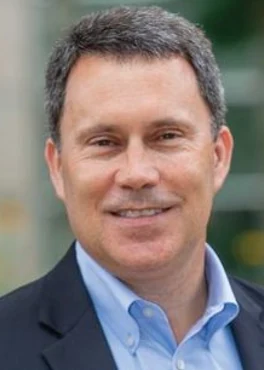
1. Business Role
Global Operations centralizes operating support for Upstream, Product Solutions and Low Carbon Solutions. Gibbs leads that organization rather than an additional independent financial segment or every local legal entity in the group. [S8]
The role links common operating capabilities with businesses whose physical systems differ. An offshore production system, refinery and emerging carbon-storage service do not have identical equipment or customer obligations. Central coordination is useful only if it strengthens execution while preserving the technical and legal distinctions that matter locally.
2. The Business He Inherited
Gibbs took the role in 2026 after the company had already centralized other capabilities, including projects, technology and supply chain. The announcement describes an evolution of the operating model introduced in 2019, not the invention of industrial operations from scratch. [S8]
His own previous Global Projects role gave him experience with the period before a facility becomes an operating asset. The inherited challenge was connecting that knowledge with continuing reliability and performance across a broad installed system, including assets developed by earlier teams.
3. Business Thesis
The documented organizational thesis is that common expertise can improve safety, reliability and environmental performance across businesses. Those are intended benefits of the model, not proof that every result improved immediately at the appointment date. [S8]
The causal interpretation is reuse with accountability. Lessons, specialist capabilities and operating methods can move across a larger asset base, reducing avoidable duplication. But applying them requires understanding the actual equipment and local conditions; a central policy cannot substitute for competent execution at the site where the work occurs.
4. Strategic Bets
The principal bet is organizational: put operating support into a common structure while retaining business-specific priorities. That changes how expertise can be deployed, rather than adding a new product line.
A related people-development approach appears in Gibbs' 2026 public comments. He describes building capabilities through assignments across business and central organizations. The proposition is that experience becomes more useful when people can apply it beyond one job or asset. [S36]
These are documented leadership-level positions. They do not establish that Gibbs personally designed every training process or prescribed every operating procedure.
5. How the Bets Changed the Business
The model creates a wider organizational route for sharing operating knowledge and support. A business can draw on common capabilities rather than recreating every function separately, while technical teams gain access to a broader set of experiences.
The change also creates coordination demands. The organization must know who owns a decision, how risks are escalated and which practices can transfer safely. A shared team that obscures responsibility could create complexity instead of reducing it.
The 2026 structure is therefore an operating-system change to evaluate over time, not a completed financial benefit simply because the reporting line changed.
6. Resource Allocation
Operating expertise is a scarce resource alongside capital. Experienced people, maintenance capacity and specialist attention have to be allocated where the risks and opportunities justify them. A large group cannot assume that every asset can obtain unlimited support simultaneously.
Gibbs' earlier projects background is relevant to the handoff between construction and operation. Decisions before startup can affect maintainability and the work required later. His current remit must coordinate those continuing consequences with day-to-day priorities.
Public sources do not disclose a personal allocation to every facility. The supported claim is the scope of the organization and its intended capability deployment, not an invented asset-level budget.
7. Before and After
Before 2026, Gibbs led Global Projects; after the change, he led the new Global Operations organization. This is a clear change in responsibility, while the underlying assets and businesses continued to operate. [S8]
Golden Pass reached its first export cargo in 2026 after a project history that included construction disruption. That chronology illustrates why project completion and subsequent operation require sustained coordination. It does not prove that one executive alone caused either the earlier delay or the later milestone. [S52]
The meaningful comparison is the performance of the operating system across time, not the number of facilities placed beneath a common title.
8. What Worked and What Did Not
The company continued bringing projects and customer services into operation, supporting the importance of shared execution capabilities. However, a corporate appointment announcement does not isolate the financial contribution of centralization from market prices, asset mix and prior investment. [S3]
Actual operating limits remained visible. Imperial reduced its 2026 refining outlook after downtime and logistics challenges. Its separate corporate compliance outcome concerning an earlier Kearl overflow also demonstrates that safety and environmental obligations require concrete local controls. [S16][S60]
These events are not evidence of Gibbs' personal culpability. They show why the organization's intended benefits must be tested against real performance rather than assumed from its design.
9. Legacy and Continuing Test
Gibbs' potential structural contribution is a more reusable operating-capability system across a large industrial portfolio. The central question is whether knowledge and resources move effectively without weakening accountability.
The role began in 2026, so a mature long-term result cannot yet be declared. Evidence would include repeatable reliability, effective project handoffs, competent responses to incidents and clear ownership of operating decisions.
A durable contribution would be visible in how the organization works after individual assignments change. That is a more demanding test than describing centralization itself as an automatic competitive advantage.
Timeline and Context
Gibbs' career moved from engineering and international management to Upstream leadership in 2016, Global Services in 2019 and Global Projects in 2021. The January 2026 appointment changed the scope again. [S8]
That progression connects field, shared-service and project perspectives. It provides context for his responsibilities without establishing personal authorship of every asset built during those periods or every practice used by the group.