1. Business Role
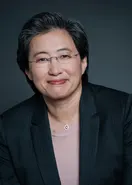
Su's authority concerns the company as a whole: strategy, organizational execution, capital and research priorities, acquisitions and major customer relationships. The role connects decisions made across technical and commercial teams rather than replacing those teams' expertise.
Her earlier chief operating officer position involved integrating business units, sales, operations and infrastructure enablement. That background is relevant because a processor roadmap becomes a business only when engineering, production and customer delivery work together. The official biography establishes the responsibilities; it does not prove that she personally originated every product architecture. [S7]
2. The Business She Inherited
Su became CEO in 2014, before Ryzen and EPYC launched. AMD already had CPU, graphics and semi-custom capabilities, but the operating position was difficult. In 2015 it reported about $3.99 billion of revenue and a $660 million GAAP net loss. [S43][S46]
The task was not founding a company with no technology. It was deciding how existing engineering and customer relationships could support a more competitive portfolio while the company faced financial pressure, manufacturing dependence and product-market competition. Those constraints made priorities consequential: AMD could not treat every possible product direction as equally affordable. [S47]
3. Business Thesis
The observable approach emphasized competitive high-performance products and sustained execution. In the 2015 results, Su connected continuing research investment with the ability to deliver improved products despite the difficult financial year. [S46]
The business logic connects product performance with repeatable delivery. A customer committing to a platform needs the current product, a route to manufacturing and confidence that support will continue. That makes an engineering roadmap and an operating organization complementary investments.
Later expansion addressed more of the customer's implementation rather than abandoning that logic. Adaptive devices added another computing choice; model engineers and system designers addressed work between a capable processor and a usable deployment. These are different ways to make the underlying technology commercially adoptable.
4. Strategic Bets
Sustaining the CPU Rebuilding Program
Ryzen and EPYC reached the market in 2017, after the financially difficult period in which AMD continued funding new products. The commitment put a renewed architecture into both PCs and servers, rather than confining it to one narrow product. [S44][S45][S46]
That widened the possible return on engineering work. It also required different routes to adoption: a desktop buyer could choose a new system directly, while a server customer needed platform qualification and confidence in later generations. Su's company-level responsibility was sustaining those commitments across the business, not personally designing every CPU.
Buying Another Computing Model Through Xilinx
The completed Xilinx acquisition added programmable devices, tools and equipment-design relationships. It expanded the portfolio by acquiring an established design ecosystem rather than treating every new workload as another x86 processor opportunity. [S11]
The resource commitment included maintaining that ecosystem. Customers with qualified equipment could not simply abandon their existing tools and designs because the supplier changed ownership. Integration therefore required continuity as well as opportunities to combine technologies.
Adding Model and Application Engineering
AMD completed the Silo AI acquisition in 2024, bringing model-development and enterprise-AI expertise into the company. The transaction addressed implementation work around the hardware, not the creation of another semiconductor factory. [S13]
The business mechanism was reducing the gap between an available accelerator and a customer's working application. Acquiring an engineering team could add capability, but the acquisition itself did not prove that every workload would migrate or produce a successful enterprise service.
Retaining System Design Without Keeping Manufacturing
The ZT transaction and subsequent manufacturing divestiture separated two capabilities that a single acquisition headline could obscure. AMD retained selected design expertise while transferring manufacturing to Sanmina. [S1][S15]
That boundary supported a broader system offer without making AMD the operator of all acquired assembly activity. Helios production in 2026 made the system direction tangible, while customer installation and operation remained separate execution stages. [S4]
5. How the Bets Changed the Business
AMD became a broader supplier of computing platforms rather than relying only on a narrower PC proposition. Server CPUs supported infrastructure relationships, while adaptive products and AI accelerators introduced additional workloads and buying processes.
By 2026 the offer included rackscale architecture alongside components and software. That widened the potential customer discussion but also increased execution requirements around networking, memory, power, cooling and deployment. [S4]
The change should not be described as AMD becoming the owner of every production stage. Its manufacturing partners remain essential, and the ZT manufacturing divestiture explicitly preserved a boundary between retained design and external production. [S1][S15]
6. Resource Allocation
AMD spent $8.091 billion on research and development in 2025. The spending demonstrates the scale of the engineering commitment, not a disclosed budget personally assigned by Su to each architecture or project. [S1]
Acquisitions added different capabilities, while the ZT transaction retained selected design people and intellectual property and divested manufacturing. The distinction shows why resource allocation is about what the company keeps and must operate, not only what it announces buying.
Large customer agreements also require allocation of engineering attention and supply planning. Their potential scale does not remove the need to balance current products, future roadmaps and the capital tied up before deliveries become cash receipts.
7. Business Model: Before vs. After
| Dimension | Early CEO period | Later operating model |
|---|---|---|
| CPU proposition | Existing products under financial and competitive pressure | Ryzen and EPYC established renewed PC and server platforms |
| Computing choices | CPU, graphics and semi-custom foundations | Added programmable/adaptive products and a broader accelerator portfolio |
| Implementation capability | Component and platform relationships | More model engineering, networking and rack-scale design within the offer |
| Manufacturing | Dependent on external production partners | Still dependent on partners; ZT design retention did not reverse the manufacturing divestiture |
These are changes in what AMD could sell and support, not only growth in its size. The 2015 revenue of about $3.99 billion and 2025 revenue of $34.639 billion illustrate the financial scale of the change, while the intervening acquisitions and reporting changes prevent a simple unchanged-segment comparison. [S1][S11][S13][S15][S44][S45][S46]
8. What Worked and What Did Not
Ryzen and EPYC availability, portfolio expansion and subsequent financial scale support the conclusion that AMD established a more credible computing position. They do not establish that all products won every comparison or every acquisition achieved its original financial expectations.
Real setbacks remained. The early loss and restructuring period was costly. Export controls produced substantial MI308-related inventory charges in 2025, with the initial quarterly amount differing from the full-year net charge. Software adoption and customer deployment also continued to require substantial work. [S1][S19][S46]
These are company outcomes during her leadership, not evidence that Su personally caused a regulatory action or individually wrote every affected design. The responsibility is leading the organization's response and managing the exposure.
9. Business Legacy
Su's structural contribution is associated with making AMD a broader, more credible high-performance and adaptive-computing supplier. The business now connects architecture, software, partners and systems across more customer decisions.
The continuing test is whether that breadth produces repeatable execution rather than organizational complexity. Announced AI capacity and future partnerships remain prospective until delivery and customer operation support the claims. A strong leadership narrative cannot substitute for those outcomes. [S4][S19]
Career Background
Before AMD, Su held engineering and business leadership roles at IBM and became Freescale's chief technology officer before leading its Networking and Multimedia business. Those roles combined technology planning with responsibility for products and their markets. [S7]
Career Timeline
- January 2012: Joined AMD to lead global business units. [S7]
- October 8, 2014: Appointed president and CEO. [S43]
- 2017: Ryzen and EPYC launched during her CEO tenure. [S44][S45]
- 2022–2026: Xilinx and Silo AI closed, ZT manufacturing was divested after selected design capability was retained, and Helios entered its announced production stage. These were different transactions and product milestones, not one completed customer deployment. [S11][S13][S15][S4]
Common Misconceptions
Su did not found AMD, and joining the company was not the same event as becoming CEO. Her engineering background does not make her the sole inventor of Zen, every GPU or acquired technology.
Evidence
Role and chronology: [S7][S43][S69]. Actual operating/financial record: [S1][S3][S19][S46][S47]. Product and acquisition milestones: [S4][S11][S13][S15][S44][S45].