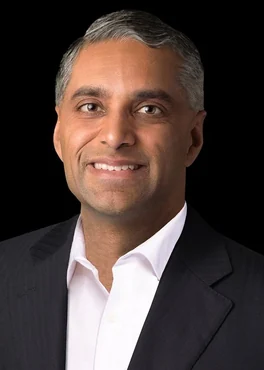
1. Business Role
Bhatia's role addresses a difficult manufacturing-company problem: customer commitments must be matched with products a network can actually make, qualify and deliver at an acceptable cost.
Micron's current biography places its four business units and global operations within his Enterprise Business Organization. The scope connects capital investment and factory execution with demand, pricing and delivery. [S19]
This is broader than maximizing one factory's output. A line can be technically efficient while producing the wrong mix for the market. The enterprise role must reconcile physical capability with the commercial job the company has promised to perform.
2. The Business He Inherited
Bhatia joined in 2017, when Micron already operated a substantial global network. He did not create its entire manufacturing footprint from an empty starting point.
The inherited challenge combined process transitions, acquired operations, product qualification and semiconductor-market volatility. More capacity could create opportunity, but could also become costly if customers reduced purchases.
His earlier operations experience is relevant background. It is not proof that every later improvement was uniquely his personal decision or that manufacturing teams and technology leaders played only supporting roles. [S19][S20]
3. Business Thesis
The logic of the expanded mandate is that commercial and manufacturing choices should reinforce each other. Capacity, product mix and customer obligations cannot be managed effectively as unrelated plans.
Micron's August 2026 announcement explicitly linked Bhatia's broader responsibilities with customer and market needs. That supports an organizational thesis about coordination; it does not establish a completed multi-year performance outcome for a role only recently expanded. [S20]
The practical objective is to make commitments that the operating network can fulfill while allocating resources toward products customers need. The test is repeated execution, not the title change alone.
4. Strategic Bets
Integrate market demand with the operating plan
The expanded organization combines business-unit responsibilities with manufacturing and delivery. This can reduce the distance between a customer decision and the resources needed to honor it. [S20]
Treat the network as differentiated capabilities
Support demanding product ramps
HBM and integrated storage products require coordinated manufacturing and qualification work. Product milestones demonstrate company execution, while Bhatia's operating role makes the associated capacity and delivery challenges relevant to his responsibilities. [S22]
5. How the Bets Changed the Business
The organizational change gives one executive a more direct view across the operating P&L and customer-facing units. In principle, this makes trade-offs between capacity, pricing and delivery more visible within one mandate.
That is an analytical consequence of the documented structure, not evidence that every internal conflict has disappeared. Technology development retains its own leadership, and major decisions still involve the CEO, board, teams and partners.
A broader role can improve coordination while also concentrating difficult choices. The same executive must balance near-term output, future investment and customers whose programs can change.
6. Resource Allocation
Manufacturing allocation concerns technology and timing as well as geography. A new building does not immediately produce qualified parts, and a packaging facility cannot be counted as interchangeable wafer capacity.
The Sanand opening established a commercial assembly/test operation using wafers produced elsewhere. The Singapore NAND project described future front-end output. Those activities solve different constraints. [S25][S24]
Micron's Tongluo P5 acquisition similarly required retrofit and a future shipment ramp. Acquiring a site was a milestone, not proof that mature output was immediately available. [S27]
The allocation problem is sequencing these investments with process readiness and customer requirements, while preserving the ability to respond if demand changes.
7. Before and After
Bhatia's earlier Micron scope centered on global operations. The August 2026 appointment added explicit leadership of business units and broader operating-P&L accountability. The change is therefore one of organizational integration, not simply a renamed factory-management position. [S20]
The business also operates with a more demanding current product mix and major capacity commitments. HBM, server memory and storage require different integration paths, while existing long-lifecycle products still need support. [S1]
However, fiscal 2026 results cover a year that almost entirely preceded the expanded appointment. They cannot be presented as the measured result of several years under the new structure. They provide company context, not a clean before-and-after experiment for that organization change. [S2]
8. What Worked—and What Did Not
The completed Sanand opening and disclosed product ramps establish concrete operating milestones. They are more informative than a generic claim that the global network has become efficient. [S25][S22]
Micron's fiscal 2023 loss, inventory write-downs and underutilization costs show the limits of operational capability in an unfavorable market. Factories and technology did not prevent excess inventory and weak economics. [S3][S33]
These outcomes occurred during Bhatia's operations tenure. They belong in an assessment of the business he helped operate, while stopping short of assigning every market-price movement or accounting charge to him personally.
The expanded role is too recent to establish its long-term success. Future performance must show whether closer coordination improves decisions through less favorable conditions as well as strong demand.
9. Business Legacy
Bhatia's developing legacy concerns making a large memory network function as an integrated commercial system. The durable contribution would be an organization that can translate technology and customer commitments into reliable, economical delivery.
That is not measured solely by square feet built or the largest announced capital budget. Useful capacity, product quality, timing and the ability to manage a downturn are more demanding tests.
The legacy remains open because major planned facilities and the expanded operating structure have not completed their full economic lives. The evidence supports a substantial mandate and concrete milestones, not a finished verdict.
Career Context
His prior roles across semiconductor and storage organizations provide experience relevant to operations and integration. His engineering and management education adds context but cannot substitute for evidence about a specific Micron decision. [S19]
The move from operations leadership to a broader operating-P&L mandate is the central business distinction. It connects the question “can the network make this?” with “should the company commit resources and sell it on these terms?”
Decision Timeline
| Date | Event | Boundary |
|---|---|---|
| 2017 | Joins Micron | Inherits an existing multinational network |
| Fiscal 2023 | Company reports loss and utilization costs | Real operational/economic setback, not proof of one personal cause |
| February 2026 | Sanand commercial opening | Assembly/test, not an Indian wafer fab |
| March 2026 | HBM4 and other production milestones | Company/team execution, not sole individual invention |
| August 2026 | Expanded president/COO appointment | New business-unit and operating-P&L scope |
Common Misconceptions
Bhatia is not Micron's founder, and his current role should not be backdated to every year since 2017. A factory opening is not the same as mature qualified output, and the enlarged 2026 role has not yet produced a long history from which to infer permanent success.
Evidence
Biography and appointment sources establish responsibilities. Dated factory and product records establish milestones, while filings supply the actual negative case. Operational mechanisms are interpreted from that scope without inventing private motives or sole personal causation. [S19][S20][S25][S24][S27][S22][S33]