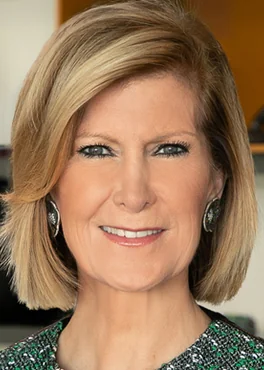
1. Business Role
Erdoes oversees Asset & Wealth Management, which includes investment-management and private-banking activities. The business combines client portfolios and advice with relevant banking relationships, but those are not all the same economic service. [S1]
Her task concerns people, investment processes, distribution, technology and governance. It does not mean she personally selects every security or authors every fund strategy.
The distinction matters because an investment organization depends on specialist teams and defined mandates. Leadership shapes their resources and operating environment without replacing every portfolio manager's role.
2. The Business She Started or Inherited
Erdoes inherited established investment and private-banking franchises within JPMorgan Chase. Her 2009 appointment was not the founding of those businesses. [S56]
The operating challenge was maintaining useful client relationships while markets, products and distribution changed. Institutional mandates, funds and private clients had different requirements even when they shared research or infrastructure.
The business also had to preserve a distinction between growing client assets and earning appropriate compensation for serving them. A large asset figure is not corporate ownership or an assurance of customer satisfaction.
3. Business Thesis
Her stated strategy combines active investment capabilities with advice, global reach and continued spending on people and platforms. The 2025 letter emphasizes active management, ETFs, personalization, advisors and technology. [S58]
The economic logic is that investment expertise becomes more useful when it can be delivered through formats and relationships clients actually want. An effective strategy with inadequate access or service can still struggle commercially.
The reverse also applies. Strong distribution cannot guarantee that a portfolio performs well or that every product fits every client. A sustainable franchise needs both useful capabilities and appropriate delivery.
4. Strategic Bets
One commitment is active ETF development, connecting managed investment strategies with a different product wrapper and distribution channel. JEPI illustrates a real strategy in that offering, but its portfolio team and risk disclosures should not be replaced with a claim that Erdoes personally invented the investment process. [S58][S38]
A second is personalization, including separately managed account infrastructure and related technology. The objective concerns adapting implementation to client circumstances rather than offering one identical portfolio to everyone. [S58]
A third is investment in advisor capacity, training and workplace connections. These can extend how the business reaches clients, while hiring and technology still require economic discipline and appropriate controls.
5. How the Bets Changed the Business
The franchise can serve investors through funds, institutional arrangements and broader wealth relationships. Different formats make investment capabilities accessible through more than one route.
That breadth can deepen relationships. A business owner or employee with an investment-related need may later require advice, banking or other support. It does not follow that every workplace participant automatically becomes a Private Bank customer.
The same development increases governance complexity. Product, distribution and advice roles can create incentives that need transparent disclosure rather than an assumption that affiliation always aligns interests.
6. Resource Allocation
An investment business allocates resources to research, portfolio teams, client coverage, technology and controls. Advisor hiring and new products can require spending before the associated relationships mature.
The decision is not simply whether to maximize assets under management. Different strategies have different fees, capacity constraints and service requirements. More assets can be economically attractive in one product and difficult to deploy effectively in another.
Current AWM reporting also distinguishes managed assets from other client assets. These categories cannot be combined indiscriminately or treated as financial resources available for management to spend. [S4]
7. Before and After
Since the 2009 appointment, the business has expanded its investment formats, client relationships and delivery capabilities. The 2025 letter describes active ETFs, personalization and advisor development as current components of that longer operating record. [S56][S58]
The comparison should not imply a constant reporting perimeter or that market appreciation equals newly won business. Client flows, asset prices, classifications and product mix can all affect reported scale.
Likewise, a strong year for the segment is not proof that every managed strategy or individual client had a positive outcome. Aggregate corporate earnings and client investment returns answer different questions.
8. What Worked and What Did Not
The filing records substantial AWM revenue and earnings, while Erdoes's letter describes sustained client-asset inflows and development of investment capabilities. These support a record of franchise growth, not a guarantee of future performance. [S1][S58]
Governance failures must remain part of the account. In 2015, two wealth-management subsidiaries admitted wrongdoing and agreed to a $267 million SEC settlement over undisclosed conflicts, including proprietary-product preferences. That was an institutional finding, not a finding of Erdoes's personal liability. [S59]
More recently, the SEC's October 2024 actions included JPMIM joint-transaction and principal-trade failures. The broader release covered several affiliates and cases and was settled without admission or denial. Its entire payment total should not be relabeled as one AWM penalty or a personal fine. [S63]
These events show why product breadth and growth require independent attention to conflicts, disclosure and transaction controls.
9. Legacy and Continuing Questions
Erdoes's leadership record is ongoing. The continuing question is whether the organization can preserve useful investment and advice capabilities while expanding formats and relationships without making responsibilities less clear.
Technology can improve research, implementation and servicing, but it cannot eliminate the need to explain risks or manage conflicts. Client trust is an operating requirement, not an asset that can be assumed permanent because reported balances are large.
Business Context
Asset Management develops and manages strategies. Private Bank coordinates broader wealth-client services. Understanding Erdoes's scope requires both roles without pretending they are one uniform fund business.
Business Timeline
Earlier senior AWM roles preceded her 2009 CEO appointment. The 2015 disclosure settlement, later product and advisor expansion, 2024 enforcement actions and 2026 continuing role form different parts of the record rather than a one-direction story of uninterrupted success. [S56][S59][S58][S63][S5]
Common Misconception
Client assets are not all actively managed portfolios or assets owned by JPMorgan. Nor does leading the business mean Erdoes personally designed every product, made every investment decision or was individually found liable for every affiliate failure.
Evidence
The biography establishes appointment history. Filings and the letter establish the business and its stated priorities. SEC records establish actual failures with their legal and attribution boundaries, while the product factsheet prevents an income strategy from being described as guaranteed return. [S56][S1][S4][S58][S59][S63][S38]