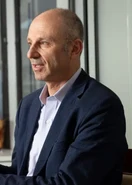
1. Business Role
A chief scientific officer connects discovery decisions with the people and facilities needed to test them. Dolsten's responsibilities concerned a portfolio of research efforts rather than a single invention. The organization had to translate knowledge from internal teams and partners into studies, submissions and products.
This role differs from both the CEO's overall capital allocation and a principal investigator's direct scientific work. Research leadership can affect priorities and coordination without determining each experimental result or writing every development protocol.
2. The Business He Inherited
Large pharmaceutical research faces a recurring constraint: current products generate cash for work that may fail or take years to reach the market. Changes in company structure and external science create opportunities but also require teams to integrate unfamiliar knowledge.
Pfizer's modern development model combined internal discovery with licensing, collaboration and acquisition. The operating question was how to retain the benefits of scale without assuming that every important idea had to originate inside Pfizer. [S1]
3. Business Thesis
Match scientific origin with complementary capabilities
An external platform may be valuable because it adds knowledge the research organization lacks. The partnership works when each participant has a clear responsibility and when evidence can move across the boundary between their organizations.
Treat development as part of science
A candidate's usefulness depends on more than initial biological activity. Clinical evidence, reproducible manufacturing, safety evaluation and regulatory review all determine whether it can become a medicine. Research leadership must connect these requirements early enough to change the program while options remain open.
4. Strategic Bets
Support the BioNTech collaboration
Coordinate overlapping development work
The pandemic compressed the time available for successive handoffs. Activities had to proceed in parallel while formal clinical and regulatory requirements remained. The opportunity was earlier access to a product; the operating exposure included investment before full certainty and the need to maintain consistency across rapidly expanding work.
Maintain a portfolio beyond the emergency
A research organization cannot define its entire future through one exceptional project. Vaccines, biologics and other medicines have different development cycles. Preserving technical depth and the ability to work with additional partners matters after the extraordinary demand has passed.
5. How the Bets Changed the Business
The collaboration demonstrated that Pfizer could work at large scale with a platform developed elsewhere. It reinforced a model in which scientific access and operating capability can be combined contractually rather than only through ownership.
That success did not eliminate the difficulty of building the next medicine. Each disease, candidate and manufacturing process introduces new evidence requirements. A successful partnership is a capability to repeat disciplined collaboration, not a guarantee that all future projects will reproduce the same result.
6. Resource Allocation
Scientific resource allocation includes the choice of experiments and the organizational capacity to act on their results. Expanding one program can draw clinical, regulatory and manufacturing-development specialists away from another. The relevant cost therefore includes attention and timing as well as the research budget.
Partnerships add governance requirements: data must be shared appropriately, development responsibilities must be assigned and scientific disagreement must lead to a decision. These are recurring operating tasks, not a one-time consequence of signing a contract.
7. Business Model: Before vs. After
| Dimension | Conventional sequential development | Pandemic collaboration experience |
|---|---|---|
| Scientific origin | Internal or licensed candidate | External mRNA platform combined with Pfizer capabilities |
| Timing | More activities wait for earlier milestones | Significant work overlaps under continuing evidence requirements |
| Organizational challenge | Coordinate functions within a program | Also coordinate partners, rapid supply expansion and evolving demand |
8. What Worked and What Did Not
The vaccine received U.S. emergency authorization in December 2020. That is a documented outcome of the wider collaboration. It cannot establish that every aspect of the research portfolio succeeded or that Dolsten alone caused the result. [S34]
Later COVID demand normalization also shows why technical success and durable revenue are separate questions. Research leadership can help create a useful product while market demand, policy and competition subsequently change its economics. Pfizer's financial statements describe that later company outcome. [S2]
9. Business Legacy
Dolsten's legacy is best assessed through organizational capabilities that survive a leadership transition: scientific evaluation, development coordination and the ability to combine internal work with external technology. The 2025 succession provides a boundary for attributing subsequent decisions to the next leadership team. [S51]
Career Background
The succession announcement identifies Dolsten as the departing scientific leader and distinguishes his period of responsibility from Boshoff's incoming enterprise remit. The historical record of the partnership is more informative for this analysis than an undated list of current Pfizer programs. [S51]
Career Timeline
- 2020: Scientific leadership during the Pfizer–BioNTech collaboration and vaccine development. [S32][S33]
- December 2020: U.S. emergency authorization for the collaboration's vaccine. [S34]
- 2024–2025 succession: Pfizer announced Boshoff as successor, with the appointment effective January 1, 2025. [S51]
Common Misconceptions
A historical scientific leader is not the current owner of every research decision
Dolsten's earlier role and the capabilities developed during it should be separated from decisions made after the succession. An organizational legacy can persist without extending personal responsibility indefinitely.
Evidence
Succession and attribution boundary: [S51]. Collaboration responsibilities: [S32][S33]. Authorization milestone: [S34]. Current company financial context: [S1][S2].