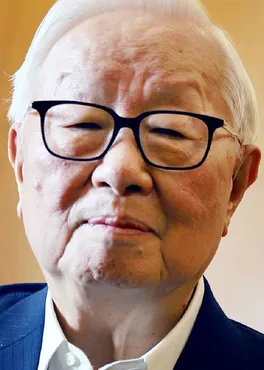
1. Business Role
Chang's role is best described as:
He did not invent semiconductor fabrication.
The strategic change was to build a company whose core identity was:
Manufacture chips for customers without competing against them with TSMC-branded semiconductor products.
That was a business-model innovation more than a single-product innovation.
TSMC itself says Chang founded the company in 1987 and pioneered the pure-play foundry model. [S3]
2. The Business Chang Started
The semiconductor industry Chang knew was dominated by integrated device manufacturers.
The traditional model looked like this:
Semiconductor company
↓
designs chip
↓
owns factory
↓
manufactures chip
↓
sells chip
That structure created a major barrier for new chip companies.
To build a semiconductor company, an entrepreneur might need both:
a differentiated chip design
+
an extremely expensive factory
Chang separated those functions.
The TSMC model was:
Customer
owns chip design and market

TSMC
owns manufacturing technology and capacity
Market opportunity
A growing number of chip designers could benefit from manufacturing without owning fabs.
Core customer
Semiconductor companies that needed reliable external manufacturing.
Value proposition
You design the product.
We manufacture it.
We do not launch a competing branded chip.
Revenue logic
TSMC earns money by manufacturing customer designs rather than monetizing a proprietary end-product chip brand.
Core capability
Manufacturing technology, capacity, yield and reliability.
Initial business constraint
The model depended on enough customers being willing to trust an independent outside manufacturer with strategically important chip designs.
3. Business Thesis
Thesis 1 — Semiconductor manufacturing can be a standalone business
Historically, fabrication was often treated as one department inside a semiconductor product company.
Chang's foundry model treated manufacturing as a business that could serve many independent chip designers.
Business implication
Build one manufacturing platform that many customers can use.
Where it showed up
TSMC's entire company structure.
Thesis 2 — Customer neutrality can create trust
If the foundry launches its own competing product, customers may worry that manufacturing knowledge, capacity or technology could advantage a rival.
TSMC's early company profile explicitly said its charter prevented it from designing or making its own branded IC products, making TSMC a partner rather than a competitor. [S19]
Business implication
Do not compete broadly with customers in their end-product markets.
Where it showed up
The pure-play foundry identity.
Thesis 3 — Scale can make advanced manufacturing economically viable for many customers
A fab is extraordinarily expensive.
But if one foundry can serve many customers, the same manufacturing infrastructure can support a broader design ecosystem.
Business implication
Aggregate manufacturing demand across many customers.
Where it showed up
TSMC's large capacity expansion and global customer base.
Thesis 4 — Manufacturing can become a source of strategic differentiation
A foundry is not valuable only because it owns cleanrooms.
It can differentiate through:
- process technology;
- yield;
- cycle time;
- capacity;
- reliability;
- customer service.
Business implication
Invest continuously in process R&D and manufacturing excellence.
4. Strategic Bets
Strategic Bet 1 — Create a pure-play foundry
THE PROBLEM
Chip design entrepreneurship was constrained by the capital required to build fabs.
THE BET
Create a company that manufactures chips for other companies but does not build a broad competing branded semiconductor product line.
THE MECHANISM
many customers
share one manufacturing platform
↓
customers avoid building fabs
↓
TSMC gains scale
↓
TSMC reinvests in better technology and capacity
THE RISK
At the time, an independent foundry was not yet a proven large-scale business model.
Chang later recalled that the idea initially looked like a "solution looking for a problem" because customers were not yet accustomed to buying only the manufacturing function. [S27]
THE RESULT
The foundry model grew alongside the fabless semiconductor industry.
THE BUSINESS IMPACT
The semiconductor value chain became more specialized:
fabless design company
+
pure-play foundry
instead of requiring every company to be an IDM.
ATTRIBUTION
Directly documented
Chang founded TSMC around the model and is widely documented by TSMC, Stanford and the Computer History Museum as the business-model pioneer. [S3][S17][S18]
Strategic Bet 2 — Refuse to compete with customers
THE PROBLEM
External manufacturing requires customers to trust the foundry with proprietary designs, demand forecasts and product timing.
THE BET
Build customer neutrality into the business model.
THE MECHANISM
If customers believe the manufacturer is not trying to replace them in the end market, they can be more willing to commit important designs and long-term roadmaps.
THE RISK
TSMC gives up the possibility of capturing the product margin available to a successful branded processor company.
THE RESULT
Customer trust became one of TSMC's stated foundational strengths.
THE BUSINESS IMPACT
Neutrality became a competitive advantage rather than merely a restriction.
ATTRIBUTION
Directly documented at the business-model level [S19]
Strategic Bet 3 — Reinvest scale into technology and capacity
THE PROBLEM
Foundry customers need newer nodes and larger volumes over time.
THE BET
Keep expanding fabs and process technology rather than remaining a low-cost mature-node manufacturer.
THE MECHANISM
more customer demand
↓
more capacity and R&D
↓
better manufacturing technology
↓
more advanced customer products
↓
more demand
THE RISK
Fabs require large capital commitments before future demand is certain.
THE RESULT
TSMC evolved from an independent manufacturing service into a leading-edge foundry platform.
THE BUSINESS IMPACT
The company shifted from competing mainly on external manufacturing availability toward competing on technology leadership, manufacturing scale and customer trust.
5. How Those Bets Changed the Business
Product
manufacturing service
↓
process technology + manufacturing platform
↓
design ecosystem + advanced packaging
Customer
semiconductor companies needing external capacity
↓
large global fabless ecosystem
+
system companies designing custom silicon
Revenue logic
manufacture wafers
↓
monetize advanced process and manufacturing scale
↓
add packaging / testing / design-enablement value
Distribution
TSMC does not use consumer retail distribution.
Its route to market is direct, technical and long-term:
customer roadmap
↓
design collaboration
↓
capacity commitment
↓
manufacturing
Moat
factory capacity
↓
technology + yield + scale + trust + ecosystem
Industry position
new independent foundry
↓
central manufacturing platform for the fabless industry
6. Resource Allocation
Chang's business model required TSMC to allocate resources differently from a branded chip company.
Manufacturing capacity
Capital had to go into fabs rather than consumer product marketing.
Process R&D
The company had to keep improving manufacturing technology so customers would continue bringing leading products to the foundry.
Customer support
TSMC had to build an organization capable of working with many different customer designs without owning those designs itself.
Geographic customer relationships
TSMC established customer-facing operations outside Taiwan early in its history, including North America and Europe. [S26]
Design ecosystem
Over time TSMC invested in design enablement that reduced the friction between customer design and manufacturing.
7. Business Model: Before vs. After
Traditional integrated semiconductor model
Value created Design + manufacture + sell own chip
Core asset Product IP + fab
Customer Device maker / system company
Manufacturing Internal
Competitive conflict External chip designers may be competitors
Chang's pure-play foundry model
Value created Manufacturing technology and capacity for other companies' designs
Core asset Process R&D + fabs + yield + scale + trust
Customer Chip designer / system company
Manufacturing TSMC's main product
Competitive conflict Reduced by avoiding a broad competing branded-chip portfolio
8. What Worked / What Didn't
WHAT WORKED — Pure-play foundry
What happened
The fabless semiconductor sector expanded dramatically.
Why it worked
Semiconductor design became valuable enough to support companies that did not own fabs, while manufacturing became more capital intensive.
Capability created
Independent, scalable manufacturing infrastructure for many customers.
What changed afterward
Design and manufacturing became more separable business roles.
WHAT WORKED — Customer neutrality
What happened
TSMC became a manufacturing partner for many companies that compete with one another.
Why it worked
TSMC's business succeeds when multiple customers succeed rather than when one TSMC-branded processor wins an end market.
Capability created
A multi-customer manufacturing platform.
WHAT WORKED — Technology leadership
What happened
TSMC moved beyond being a capacity provider and became a major source of leading-edge manufacturing technology.
What changed afterward
Customer product roadmaps increasingly became tied to foundry roadmaps.
WHAT DID NOT HAPPEN — TSMC did not become a branded chip company
This is not a failure.
It is an important strategic exclusion.
Chang's model deliberately left product-market ownership to customers.
What this reveals
Business strategy is partly defined by what a company chooses not to do.
9. Business Legacy
Chang's business legacy is structural.
From integrated semiconductor company as the default model

to

fabless designer + independent foundry as a scalable alternative
That shift changed who could start a semiconductor company.
A new chip designer no longer necessarily had to finance a leading-edge fab.
The lasting business contribution was therefore not one process node or one factory.
It was the creation of a specialized manufacturing institution that could serve many competing chip designers at once.
That business model was built by TSMC as an organization and later expanded by generations of engineers and executives.
Career Background
Texas Instruments
General Instrument
He later served as president and COO of General Instrument.
ITRI and Taiwan
Chang was recruited to Taiwan's Industrial Technology Research Institute and then founded TSMC in 1987. [S18]
Career Timeline
Texas Instruments semiconductor career
General Instrument
Industrial Technology Research Institute in Taiwan
Founds TSMC
TSMC lists in Taiwan
TSMC ADSs list in New York
Fabless-foundry model scales
Advanced packaging begins adding a new integration layer
Chang retires from TSMC management
Common Misconceptions
"Morris Chang invented semiconductor manufacturing."
No.
His business contribution was the dedicated pure-play foundry model.
"The foundry model was obvious from the beginning."
No.
Chang himself later recalled that customers initially were not clearly demanding a standalone manufacturing function. [S27]
"TSMC won by being a cheap contract manufacturer."
Too simple.
The business evolved around technology, capacity, yield and customer trust, not only low manufacturing cost.
"Fabless means manufacturing stopped mattering."
The opposite.
Fabless specialization makes the foundry even more important.
Evidence
- TSMC says Morris Chang founded the company in 1987 and pioneered the pure-play foundry model. [S3]
- Stanford describes Chang as a pioneer of the dedicated foundry model. [S17]
- The Computer History Museum explains how the model let designers avoid building expensive fabs. [S18]
- TSMC's 1997 profile explicitly described its customer-neutral charter. [S19]
- Chang retired from TSMC management in 2018. [S16][S22]