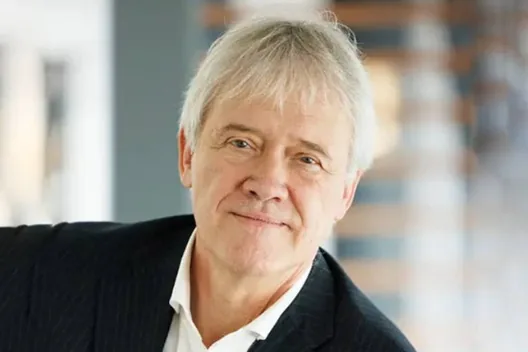
1. Business Role
Wennink's role was to connect technical ambition with a business able to keep paying for it. EUV needed years of engineering before its performance met production economics. During that interval, ASML also had to deliver and improve DUV systems, maintain customer confidence and fund an expanding organization.
The co-president structure matters. Van den Brink carried the technology leadership role; Wennink carried overall executive and commercial responsibilities. ASML's progress cannot be assigned to one of them as a solitary invention. It depended on a division of responsibilities and on teams beyond the executive board. [S24][S48]
2. The Business He Inherited
At the start of his CEO tenure, ASML already had TWINSCAN, immersion lithography, major customers and a growing installed base. EUV had a much less settled economic position. A machine could produce promising images without delivering enough wafers at sufficient availability for large-scale production.
The Cymer acquisition closed in May 2013. Its timing highlights the starting problem: light-source development had become central to whether EUV could deliver customer value. Buying a capability and earning a return from it were different milestones. ASML still had to turn the combination into reliable output. [S29]
Existing DUV revenue was therefore not a business to abandon while waiting for EUV. It supported customers and supplied part of the economic foundation for the next technology.
3. Business Thesis
A customer roadmap requires sustained commitments
ASML's strategy during this period joined long-horizon technology investment with direct customer and supplier collaboration. The business implication is straightforward: a chipmaker cannot commit its manufacturing process to an equipment roadmap whose funding or delivery credibility repeatedly disappears during a downturn. [S26][S35]
This does not mean spending without limit. It means judging a development program against the production capability it must enable, rather than against one quarter's sales contribution.
Control critical interfaces without owning every supplier
The ZEISS SMT investment illustrates a selective approach to company boundaries. ASML bought a minority interest and supported future optics development while retaining a specialist partner, rather than converting every supplier into an internal department. [S35]
The model combined coordination with specialization. It created dependence as well as strength: ASML still needed its partner to meet technical and volume commitments.
4. Strategic Bets
Integrate the EUV source-development bottleneck
Cymer brought light-source technology into the group. The intended mechanism was closer coordination among the source, scanner and production roadmap. The acquisition did not itself solve contamination, optics, availability or every remaining EUV issue. [S29]
This was a company transaction completed as Wennink became CEO, not proof that he personally originated every aspect of it. Its importance during his leadership was the work of converting acquired capability into production readiness.
Extend patterning control beyond exposure
ASML acquired HMI in 2016, adding electron-beam inspection to its broader patterning-control capabilities. This complemented computation and optical measurement. [S30][S31]
The commercial bet was that smaller features increased the value of understanding what printed, not just supplying the machine that exposed the wafer. Inspection could speed process learning and reveal defects that scanner specifications alone did not explain. Integration and inspection throughput were the corresponding risks.
Deepen the long-term optics relationship
The 2016 ZEISS SMT agreement supported the next optical generation. Its payoff depended on technologies and customer manufacturing needs arriving together. [S35]
For an executive team, the difficulty was committing resources before the final market was certain. Waiting for a fully established High-NA market would have meant starting critical optics development too late.
5. How Those Bets Changed the Business
ASML's value proposition widened from a productive scanner toward a connected patterning system. Software, measurement, inspection and support increasingly complemented exposure. The buyer remained the semiconductor manufacturer, but the equipment's role in process development became broader.
The revenue logic also deepened around the installed base. A production fleet created service needs and opportunities for upgrades. That made the company less dependent on the commercial life of a single model, although it did not eliminate semiconductor cycles. [S26][S51]
Distribution was not transformed into a consumer channel. It remained an engineering-intensive relationship with a concentrated customer set. Scale meant more global deployment and support capability, not simply more outlets.
6. Resource Allocation
The important allocation was across time. Present-generation equipment had to remain attractive while research, acquisitions and supplier investments supported future products. Weakening either side could damage the other: current customers funded and qualified the roadmap, while future capability protected long-term relevance.
Acquisitions also absorbed integration attention. Cymer addressed sources; HMI addressed inspection. Their different roles show why acquisition totals alone say little about strategic value. The relevant question is which missing capability each brought and whether it became useful in customer manufacturing.
A larger installed base required investment in people and parts near fabs. That infrastructure is an operating asset, even when it is less visible than a new scanner.
7. Business Model: Before vs. After
| Dimension | At the beginning of the CEO period | At the 2024 handover |
|---|---|---|
| EUV | A demanding industrialization program | Established production technology |
| Supporting capability | Existing scanner and computation strengths | Broader source, inspection and control integration |
| Customer relationship | Equipment supply and roadmap collaboration | Deeper reliance on a qualified EUV ecosystem |
| Service role | Support for an installed fleet | Larger long-lived installed-base opportunity |
| Next transition | Make EUV commercially dependable | Extend productivity and prepare High-NA |
The comparison describes developments during his tenure. It does not imply that every capability originated after 2013 or ended with his retirement.
8. What Worked / What Didn't
EUV reached production adoption, and ASML entered the handover with a substantially stronger industrial position. The existence of repeat customer deployment is a better test of that result than celebratory descriptions of executive skill. [S21][S24]
Technology commercialization nevertheless took longer and required more supporting work than a simple laboratory-to-market story suggests. Source performance, availability and ecosystem readiness were recurring constraints. HMI also needed time to develop its contribution rather than immediately reproducing EUV's economics. [S29][S30][S54]
The limit is important: strong management could coordinate and fund a difficult program, but could not remove physics, customer qualification or regulatory authority.
9. Business Legacy
Wennink left an organization better able to finance and commercialize highly complex technology across many companies. Its strength was not merely possession of a protected product. It was a repeatable relationship among research, suppliers, customers, manufacturing and service.
That structure was built with van den Brink, earlier leaders and a large technical organization. Customers willing to qualify new processes and specialist partners willing to invest were part of the achievement. His business legacy is best understood as industrial scaling under those shared conditions.
Career Timeline
1999 — Joins ASML as CFO
Financial leadership becomes the starting point for his later executive role. [S48]
2013 — Becomes CEO
Begins the co-president leadership period with van den Brink. [S24][S48]
2016 — Capability and supplier commitments
HMI and the ZEISS SMT agreement extend the company's patterning and optics roadmap during the leadership period. [S30][S35]
April 2024 — Retires from the executive role
The succession to Christophe Fouquet completes the handover. [S46]
Common Misconceptions
Wennink personally invented EUV
EUV emerged from decades of work across ASML and its ecosystem. Executive responsibility for commercialization is different from personal invention.
A sole production supplier faces no commercial constraints
Customers still evaluate cost, availability and process alternatives, while governments determine licensing requirements.