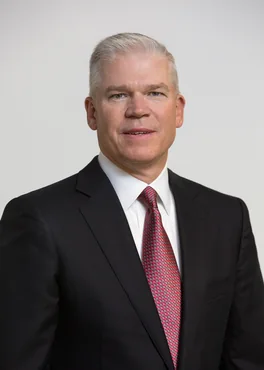
1. Business Role
The useful evaluation therefore connects product choices with capital choices. A factory without demand is a burden; a catalog without supply or reach can fail to realize its value. Leadership has to make those pieces reinforce rather than contradict one another.
2. The Business He Inherited
TI already had important Analog and DSP capabilities when Templeton became CEO. Earlier engineering and acquisitions supplied assets he did not personally create.
The starting challenge was choosing where ongoing investment could create durable customer positions. Broad participation offers many possibilities, but staying competitive in each consumes development, support and sometimes manufacturing resources. The largest visible market is not necessarily the best place for every company to compete.
3. Business Thesis
The resulting direction favored broad analog and embedded positions, supported by technology, manufacturing and customer access. Rather than rely on one flagship architecture, the model sought many useful component selections across different applications. [S7]
The commercial arithmetic is cumulative. An individual device can have modest annual sales yet remain in equipment for years. The aggregate opportunity depends on maintaining a relevant portfolio, not claiming every catalog item is exceptional or immune to competition.
4. Strategic Bets
Reinforcing Analog through National
The 2011 National agreement proposed approximately $6.5 billion in cash for an established analog business. TI emphasized complementary products and the opportunity to expose them to greater customer reach. The acquisition completed in September 2011. [S30][S31]
The strategic premise was more than buying current revenue. It was making acquired engineering commercially useful in additional designs. Qualification and actual customer production still had to turn access into shipments.
Choosing where wireless investment belonged
TI's November 2012 restructuring redirected selected OMAP and connectivity investment toward embedded applications. The announcement differentiated those longer-lived opportunities from the earlier smartphone and consumer-tablet focus. [S52]
That was a boundary choice, not an abandonment of all digital or wireless expertise. It illustrates how a company can reuse capability while changing the business model in which it competes.
Supporting the portfolio with 300mm production
Richardson RFAB1 began operating in 2009, followed by RFAB2 in 2022. These facilities fit a strategy of using a manufacturing platform over long product lives. [S21]
The return depended on compatibility, qualification and demand, not diameter alone. Factory ownership added potential advantage together with utilization risk.
5. How the Choices Changed TI
Acquisitions expanded the problems TI could address. Manufacturing changed the cost and control of producing suitable devices. Customer-channel investment made more of the catalog visible and available.
The value arose from the combination. Buying a line without retaining expertise weakens the product; building capacity without demand weakens returns; reaching more engineers with unsuitable parts produces activity rather than design wins. The model required coordination rather than a collection of independent slogans.
6. Resource Allocation
TI placed long-term free cash flow per share at the center of its owner framework. That connects operating results, investment requirements and share count rather than maximize one period's reported earnings. [S7]
The framework does not eliminate tradeoffs. Fabs consume cash before output. Acquisitions commit resources that need adequate returns. Inventory can strengthen service while tying up working capital. A consistent metric helps compare those choices but cannot make an unproductive investment valuable by definition.
7. Business Model Before and After
| Question | Direction associated with the tenure |
|---|---|
| Where should resources concentrate? | Analog and Embedded opportunities |
| How can acquired products grow? | Complementary portfolio and larger customer reach |
| How should supply be supported? | Internal process technology and manufacturing |
| What should progress mean? | Long-term cash generation relative to capital and shares |
The comparison explains the business framework without attributing every product launch or later financial result to one executive.
8. What Worked and What Was Not Automatic
National's completed integration into Analog and the operation of additional fabs are observable structural changes. They establish implementation, not the exact standalone return on every acquired device or facility. [S31][S21]
The difficult side is exposure to cycles and fixed costs. Many long-lived products can simultaneously experience an order correction. Owning factories can magnify the immediate margin effect. The strategy offers potential lifetime benefits, not protection against all periods of weak performance.
9. Business Legacy
Templeton's durable influence is a set of linked commitments: choose categories with repeated customer value, support them with technology and supply, and judge investment over an appropriate horizon.
His successors inherit obligations as well as assets. Capacity must be used, software maintained and acquired expertise renewed. A strategy survives leadership only when the organization continues making useful choices under changing conditions.
Career Timeline
- 2004: became president and CEO.
- 2008: became chairman.
- 2018: CEO service included a short interruption before resuming in July.
- March 2023: CEO succession to Haviv Ilan.
- December 2025: retirement as chairman before Ilan assumed that role in January 2026.
Common Misconceptions
Focus meant TI stopped innovating
Analog and embedded competitiveness still require circuit, process, package and software development. Product longevity does not mean engineering inactivity.
Owning factories guarantees superior returns
Ownership creates potential cost and supply advantages alongside fixed-cost and capital exposure. Customer demand and execution determine the outcome.