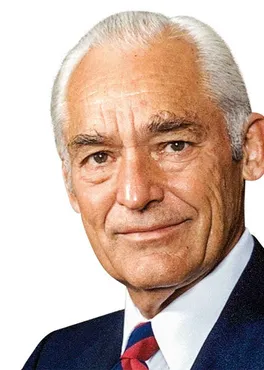
Business Role
building the original Walmart system around low prices, rural/suburban expansion, distribution efficiency, associate culture and relentless cost control
Business Context
Walton opened the first Walmart in Rogers, Arkansas in 1962 after experience operating variety stores.
Strategic Bets
- serve underserved smaller markets
- EDLP and low operating cost
- build distribution centers and private truck fleet
- share information/ownership culture with associates
- launch Sam's Club and Supercenter formats
Operating Consequences
Walmart leadership decisions affect an unusually large operating system.
They can change:
- merchandise pricing;
- labor;
- stores;
- capex;
- digital products;
- supplier terms;
- logistics;
- advertising;
- international strategy.
A strategy that looks small in percentage terms can move billions of dollars because of Walmart's scale.
Strategic Tension
the model required Walmart to continually convert scale into lower costs rather than allowing bureaucracy and overhead to absorb the advantage
Capital Allocation Lens
Leadership allocates capital among:
price investment
stores / remodels
supply chain
automation
eCommerce
acquisitions
technology / AI
shareholder returns
The goal is not to maximize any one line.
It is to protect price leadership while improving growth, margin and returns.
What to Watch
the modern company still tests every new digital/platform initiative against the founder-era promise of saving customers money and time
Evidence
Distribution as Strategy
Walton understood that low price required low cost.
Walmart invested early in distribution centers and logistics rather than allowing suppliers/wholesalers to control every flow.
That made logistics a strategic capability decades before modern eCommerce.
Cultural System
Walton treated associates as a source of local operating knowledge.
Modern automation changes tasks, but Walmart still emphasizes people-led operations.
The continuity matters: technology is expected to amplify frontline execution rather than exist separately from it.