1. Business Role
Jobs's role can be described as:
product strategist
+
portfolio simplifier
+
platform builder
He shaped what products Apple would build and which products it would stop building.
This is commercially important because product focus determines:
- engineering allocation;
- marketing clarity;
- inventory;
- developer focus.
2. The Business He Re-entered
When Apple acquired NeXT in 1997, Apple needed more than a new CEO.
It needed:
- a modern OS foundation;
- clearer product strategy;
- restored differentiation.
The business problem was:
too many products
+
weak platform direction
+
financial / competitive pressure
Jobs's return coincided with a reset of both technology and portfolio.
3. Business Thesis
Thesis 1 — Fewer products can create stronger execution
Apple simplified its product line.
Business implication
Concentrate:
- engineering;
- design;
- marketing;
- manufacturing.
Thesis 2 — Hardware and software should be designed as one product
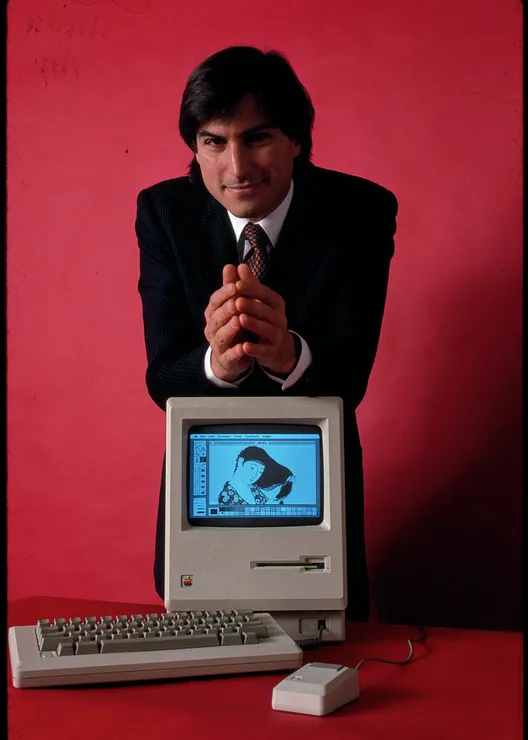
Macintosh already embodied this philosophy.
The post-1997 Apple made it a broader company rule.
Business implication
Own enough stack layers to optimize user experience.
Thesis 3 — Digital content can increase hardware value
iPod + iTunes created:
device
+
software
+
store
This became a playbook for later platforms.
Thesis 4 — Interaction model can define a category
The Mac used graphical UI / mouse.
iPhone used multitouch.
The product advantage did not come only from component specifications.
It came from a new way to use computing.
4. Strategic Bets
Strategic Bet 1 — NeXT acquisition / OS reset
THE PROBLEM
Apple's software platform needed a modern foundation.
THE BET
Acquire NeXT. [S10]
THE RESULT
NeXT technology became the basis of Apple's modern operating-system lineage.
THE BUSINESS IMPACT
Apple regained a durable software platform.
Strategic Bet 2 — Product simplification
THE PROBLEM
Too many overlapping products diluted resources.
THE BET
Reduce portfolio complexity.
THE MECHANISM
More resources per strategic product.
THE BUSINESS IMPACT
Apple rebuilt a clearer brand / engineering system.
Strategic Bet 3 — iPod + iTunes
THE PROBLEM
Digital music was fragmented.
THE BET
Combine hardware, software and digital store.
THE RESULT
Apple built a device-content ecosystem.
THE BUSINESS IMPACT
The company learned how a store can increase device value.
Strategic Bet 4 — iPhone
Strategic Bet 5 — App Store platform
THE PROBLEM
Apple could not build every iPhone use case.
THE BET
Let third-party developers build applications.
THE RESULT
iPhone gained external software supply.
THE BUSINESS IMPACT
Apple became a platform operator.
5. How Those Bets Changed the Business
Product
Mac
↓
Mac + iPod
↓
iPhone / iPad platform
Revenue
computer hardware
↓
devices + content + apps
Customer
computer buyer
↓
mobile / media customer
Distribution
Apple added direct retail and digital stores.
Developer role
Developers became a larger part of consumer product value.
6. Resource Allocation
Jobs-era Apple concentrated resources in:
- Mac;
- OS architecture;
- industrial design;
- retail;
- iPod / iTunes;
- iPhone;
- App Store.
The pattern was narrow focus on integrated systems rather than broad product sprawl.
7. Business Model: Before vs. After
| Dimension | Apple before return | Rebuilt Jobs-era Apple |
|---|---|---|
| Portfolio | Fragmented | Focused |
| OS | Strategic problem | NeXT-derived foundation |
| Core product | Computers | Computers + media + mobile |
| Distribution | Channel-heavy | Channel + Apple retail |
| Content | Limited | iTunes |
| Developer platform | Mac | Mac + iPhone |
| Customer relationship | Hardware | Hardware + content / apps |
8. What Worked / What Didn't
WHAT WORKED — Focus
The company rebuilt a clearer product portfolio.
WHAT WORKED — NeXT
Software architecture and leadership both changed.
WHAT WORKED — iPod / iTunes
Device + content economics created a scalable playbook.
WHAT WORKED — iPhone
The product became Apple's largest platform.
CONSTRAINT — Founder-centered leadership must eventually become institutional
A company cannot depend forever on one person's product judgment.
The Cook era tested whether Apple's operating model could persist.
9. Business Legacy
Jobs's structural legacy is:
INTEGRATED HARDWARE + SOFTWARE
↓
FOCUSED PRODUCTS
↓
DEVICE + CONTENT
↓
DEVICE + DEVELOPER PLATFORM
↓
ECOSYSTEM
Modern Apple has added:
- Services;
- silicon;
- AI.
But the core product architecture remains recognizable.
Career Background
Jobs co-founded Apple, left in 1985 and later founded NeXT.
Apple's acquisition of NeXT brought him back.
That makes NeXT both a technology acquisition and a leadership turning point.
Career Timeline
Common Misconceptions
"Jobs built Apple products by himself."
No.
Large teams built the products.
"His contribution was mainly aesthetics."
Too narrow.
Portfolio strategy, OS architecture and platform economics were central.
"App Store was only a distribution feature."
It changed iPhone into a third-party software platform.