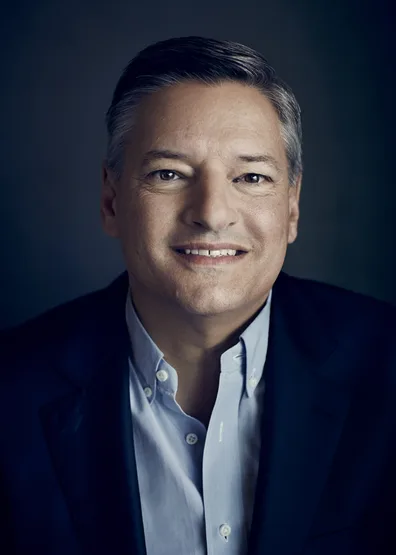
1. Business Role
The central business question is:
Why did a technology-led distribution company decide it needed to become one of the world's largest buyers and producers of entertainment?
Sarandos' role sits on the creative-supply side of Netflix's business.
Streaming technology can deliver content efficiently.
But a subscription service still needs something people want to watch.
Sarandos therefore operates around the question:
That differs from a traditional studio executive in one important way.
Netflix does not primarily need a film to earn back its budget through a standalone theatrical ticket or physical sale.
The content has to work inside a subscription portfolio.
2. The Business Sarandos Joined
When Sarandos joined Netflix in 2000, Netflix was still a DVD business.
Its content problem was:
What movies should be available to rent?
How do we acquire enough rights / discs?
How do we recommend them?
Netflix was not yet:
- a streaming service;
- a global entertainment network;
- a producer of original series;
- a film studio;
- a live-programming buyer.
Sarandos' role therefore expanded as the company's distribution model expanded.
3. Business Thesis
Thesis 1 — Variety matters more than one narrow taste
Sarandos has repeatedly argued that audiences have highly varied tastes and that a large service must program for many sensibilities. [S8]
Business implication
Build a broad slate rather than a narrow prestige-only brand.
Where it showed up
drama
comedy
reality
documentary
film
stand-up
animation
unscripted
local-language titles
live
Thesis 2 — Global entertainment should start local
Sarandos has repeatedly said that the best way to be global is to begin with local stories. [S4][S9]
Business implication
Produce in many countries rather than trying to manufacture one generic "global" style.
Where it showed up
Netflix productions in more than 50 countries and local-language hits traveling across borders. [S4]
Thesis 3 — Streaming lets distribution rules change
Traditional entertainment relied on:
theatrical window
broadcast schedule
weekly episode release
territorial licensing
Netflix could challenge these because internet distribution removed some physical and channel constraints.
Business implication
Design release patterns around the audience and the subscription product rather than legacy windows.
Thesis 4 — Content value should be judged at service level
Netflix's accounting and business model treat most content as a portfolio. [S1]
Business implication
A title can justify itself through:
- acquisition;
- retention;
- engagement;
- brand;
- global travel.
The commercial logic is not identical to theatrical box office.
4. Strategic Bets
Strategic Bet 1 — Move from second-run licensing toward originals
THE PROBLEM
A streaming service built mostly on licensed content depends on other studios for differentiation.
Rights can:
- expire;
- become more expensive;
- move to a competitor;
- remain associated with another brand.
THE BET
Commission Netflix original series.
THE MECHANISM
Exclusive content could create a stronger reason to subscribe and give Netflix more control over release and global distribution.
THE RISK
Netflix had little original-production track record and had to commit large sums before knowing whether members would value the titles.
THE RESULT
House of Cards, Orange Is the New Black and other early originals helped establish Netflix as a content brand. [S10]
THE BUSINESS IMPACT
content distributor
→
content commissioner / producer
ATTRIBUTION
Directly documented at leadership level. Reed Hastings said Sarandos drove Netflix's content-strategy revolution. [S22]
Strategic Bet 2 — Full-season release
THE PROBLEM
Weekly schedules were inherited from television distribution constraints.
THE BET
Release full seasons so members could decide how quickly to watch.
THE MECHANISM
Give the customer control over pacing and create a distinctive streaming behavior.
THE RESULT
Binge viewing became strongly associated with Netflix.
THE BUSINESS IMPACT
The service experience itself became part of content strategy.
Strategic Bet 3 — Local stories for global audiences
THE PROBLEM
U.S.-produced content alone could not efficiently serve more than 190 countries and every taste.
THE BET
Invest in local production around the world.
THE MECHANISM
A local title can satisfy a home market while Netflix's distribution, dubbing, subtitling and recommendations expose it globally.
THE RESULT
Netflix now produces in more than 50 countries. [S4]
THE BUSINESS IMPACT
export U.S. entertainment
→
create locally and distribute globally
Strategic Bet 4 — Expand across formats
Sarandos pushed the slate beyond scripted series into:
- film;
- unscripted;
- animation;
- documentaries;
- stand-up;
- live programming.
THE MECHANISM
More formats increase the number of entertainment needs one membership can serve.
THE RISK
A broad slate can increase content cost and management complexity.
THE BUSINESS IMPACT
Netflix becomes less dependent on one type of hit.
Strategic Bet 5 — Live programming
THE PROBLEM
On-demand libraries are strong for convenience but weaker at creating synchronized cultural moments.
THE BET
Add selected live events including WWE, NFL, boxing and MLB programming.
THE MECHANISM
Live can drive:
- urgency;
- sign-ups;
- weekly habits;
- advertising demand.
THE RESULT
Netflix said live represented only about 1% of view hours in H1 2026 but had produced six of its ten biggest sign-up days over the prior five years. [S2]
THE BUSINESS IMPACT
Content economics expand beyond "hours watched."
5. How Those Bets Changed the Business
Content ownership / control
licensed library
→
licensed + commissioned + produced
Geography
Hollywood-centric acquisition
→
production across 50+ countries
Release
legacy windows / schedules
→
on-demand global release + selected live events
Supplier relationship
buy finished studio content
→
finance / commission creators directly
Brand
place to watch movies
→
Netflix title as entertainment brand
Competitive position
Netflix became both:
a customer of studios
and
a competing studio / distributor
6. Resource Allocation
Sarandos-era content strategy required Netflix to commit large amounts of capital to entertainment.
By the end of 2025 Netflix reported about $24.0 billion of content obligations, including commitments for licensing and production. [S1]
The allocation expanded across:
licensed content
→ original series
→ global originals
→ film
→ animation / unscripted
→ live rights
This is not simply "spending more on content."
It is a shift in what kind of content supply Netflix is willing to finance directly.
7. Business Model: Before vs. After
WHEN SARANDOS JOINED
Content source Mostly third-party titles
Distribution DVD by mail
Geography United States
Content relationship Acquire / rent existing entertainment
Release logic Existing studio windows
NETFLIX UNDER MODERN CONTENT STRATEGY
Content source Licensed + commissioned + produced + live rights
Distribution Global streaming
Geography Production in 50+ countries
Content relationship Buyer + financier + commissioner + distributor
Release logic On-demand, full-season, theatrical selectively, live selectively
8. What Worked / What Didn't
WHAT WORKED — Originals
Original series made the Netflix brand less dependent on studio libraries.
WHAT WORKED — Local-to-global production
Titles can now originate in one country and find audiences elsewhere.
That expands the potential return on local production.
WHAT WORKED — Content-format expansion
Netflix broadened its service beyond scripted series and films.
That made the subscription useful for more entertainment moments.
DIDN'T GO AS PLANNED — Warner Bros. acquisition
In 2025–2026 Netflix negotiated a major Warner Bros. transaction.
When Paramount Skydance made a superior proposal, Netflix declined to raise its bid because management said the higher price was no longer financially attractive. [S23]
What this reveals
A larger studio library and production platform could have expanded Netflix's content position.
But management treated acquisition scale as subordinate to price discipline.
This is not a content-strategy failure in the creative sense.
It is a boundary on how much capital Netflix was willing to commit for inorganic scale.
9. Business Legacy
Sarandos' structural legacy is the transformation of Netflix's content role.
rent other people's movies
→
license streaming rights
→
commission originals
→
produce globally
→
own a large direct relationship with audiences
→
program on-demand + live
He did not create streaming technology.
His business contribution is different:
he helped make sure the streaming pipe had content that Netflix could differentiate, control and distribute globally.
Career Background
Before Netflix, Sarandos worked in video retail and distribution.
That experience matters because his career began close to actual consumer demand: which titles people chose, how video stores merchandised entertainment and how rights moved through distribution.
Netflix's 2020 leadership announcement says he worked at a local video store as a teenager and later in video distribution before joining Netflix. [S22]
Career Timeline
Takes responsibility for Netflix content operations.
Netflix begins streaming.
Early original series including House of Cards and Orange Is the New Black launch.
International originals and global expansion accelerate.
Named co-CEO alongside Reed Hastings. [S22]
Continues as co-CEO alongside Greg Peters.
Live programming becomes a larger content category.
Participates in Warner Bros. transaction negotiations and eventual decision not to raise the bid. [S23]
Common Misconceptions
"Ted Sarandos founded Netflix."
No.
Netflix was founded by Reed Hastings and Marc Randolph.
"Netflix originals mean Netflix owns every title forever."
No.
Netflix uses many deal structures across licensed and produced content.
"Sarandos personally creates Netflix shows."
No.
Creators, studios and production teams make the entertainment. His business role is content strategy, commissioning, acquisition and executive leadership.
"Live means Netflix has abandoned on-demand."
No.
Live remains a small share of overall viewing. It is an additive programming category. [S2]
Evidence
- Sarandos has led Netflix content operations since 2000: [S3]
- Hastings credited Sarandos with driving Netflix's content-strategy transition: [S22]
- Early original-series strategy: [S10]
- Local-production / global-distribution strategy: [S4][S9]
- Live-programming economics in 2026: [S2]
- Warner Bros. walkaway: [S23]