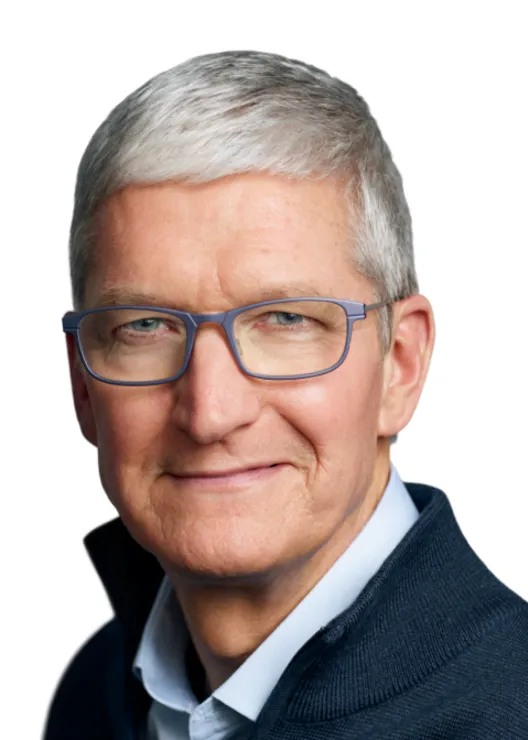
1. Business Role
Cook's role can be described as:
scale CEO
+
installed-base monetization leader
+
portfolio expander
His background mattered because Apple needed to scale.
A company can design a great product and still fail if it cannot:
- source enough components;
- build enough units;
- deliver globally;
- manage inventory;
- support customers.
Cook's early Apple career was closely connected to those problems.
2. The Business He Inherited
In 2011 Apple already had:
iPhone
Mac
iPad
iPod
App Store
retail
The company did not need basic product-market fit.
The challenge was different.
Scale
iPhone demand was growing enormously.
Dependence
Apple relied on a vast manufacturing / supplier network.
Product concentration
iPhone was becoming the most important economic engine.
Succession
Steve Jobs's product leadership had been unusually central.
Cook inherited the task of institutionalizing Apple beyond one founder.
3. Business Thesis
Thesis 1 — Operations are strategic
Cook's background implies a clear company-level mechanism:
product ambition
only becomes revenue
if supply chain can deliver
Business implication
Treat suppliers, manufacturing, logistics and inventory as strategic systems.
Thesis 2 — Installed base can become a recurring business
Thesis 3 — Ecosystem depth can grow through adjacent devices
Apple Watch and AirPods did not need to replace iPhone.
They could deepen the relationship.
Business implication
Create products that reinforce the central ecosystem.
Thesis 4 — Internalize strategic technology where it improves product integration
Apple Silicon is the clearest example.
The company moved Mac from Intel to internally designed processors while still using external foundries.
4. Strategic Bets
Strategic Bet 1 — Scale the global supply chain
THE PROBLEM
Apple had to deliver massive device volumes while preserving launch timing and quality.
THE BET
Build a highly coordinated outsourced manufacturing and supplier system.
THE MECHANISM
Apple controls:
- specification;
- quality;
- capacity commitments;
- logistics;
while partners provide much of the manufacturing capacity.
THE BUSINESS IMPACT
Apple achieved enormous global product scale without owning most final-assembly factories.
Strategic Bet 2 — Build Services around the installed base
THE PROBLEM
Hardware revenue is tied to replacement cycles.
THE BET
Create recurring / transaction businesses around active devices.
THE RESULT
Services generated $109.158B in FY2025. [S1]
THE BUSINESS IMPACT
Apple's revenue and profit mix became less dependent on device replacement alone.
Strategic Bet 3 — Enter wearables
THE PROBLEM
The ecosystem could expand into more daily-use interfaces.
THE BET
Build Apple Watch and expand AirPods.
THE MECHANISM
iPhone owner
↓
secondary device
↓
more ecosystem value
THE BUSINESS IMPACT
Apple entered health, fitness and wearable-audio categories.
Strategic Bet 4 — Move Mac to Apple Silicon
THE PROBLEM
Intel controlled a central processor roadmap.
THE BET
Move Mac to Apple's own SoC architecture.
THE RESULT
The transition began in 2020. [S18]
THE BUSINESS IMPACT
Apple gained more control over Mac performance, efficiency and product timing.
Strategic Bet 5 — Invest in privacy as product architecture
Privacy became part of:
- device security;
- app permissions;
- payments;
- Apple Intelligence.
The business effect is differentiation around trust.
5. How Those Bets Changed the Business
Customer relationship
device buyer
→
multi-device account
→
service subscriber
Revenue model
mostly hardware
→
hardware + large recurring Services
Technology
external CPU roadmaps
→
more custom silicon
Product scope
phone / computer / tablet
→
wearables / spatial computing / AI
Scale
Apple's active installed base exceeded 2.5B devices. [S3]
6. Resource Allocation
Cook-era Apple allocated resources toward:
- supplier capacity;
- manufacturing tools;
- retail;
- Services;
- wearables;
- custom silicon;
- health;
- AI;
- supply-chain diversification.
The consistent pattern was:
Preserve device quality and scale while increasing value per installed customer.
7. Business Model: Before vs. After
| Dimension | Apple in 2011 | Apple by 2026 |
|---|---|---|
| Core products | iPhone / Mac / iPad | Broader device portfolio |
| Services | Much smaller | $109B FY2025 |
| Wearables | None | Watch / AirPods |
| Mac CPU | Intel | Apple Silicon |
| Installed base | Much smaller | >2.5B devices |
| AI | Limited | Apple Intelligence / PCC |
| Leadership | Jobs → Cook transition | Cook → Ternus transition |
8. What Worked / What Didn't
WHAT WORKED — Operational scale
Apple expanded globally while maintaining major launch cadence.
WHAT WORKED — Services
The category became a major revenue and gross-profit engine.
WHAT WORKED — Wearables
Watch and AirPods created meaningful new ecosystem categories.
WHAT WORKED — Apple Silicon
The Mac transition deepened product integration.
CONSTRAINT — Manufacturing concentration
Apple still depends heavily on external manufacturing and suppliers.
CONSTRAINT — Platform regulation
App Store and payment rules face ongoing legal constraints.
9. Business Legacy
Cook's tenure can be summarized as:
PRODUCT COMPANY
↓
GLOBAL OPERATING SYSTEM

DEVICE BUYER
↓
INSTALLED-BASE CUSTOMER

HARDWARE REVENUE
↓
HARDWARE + LARGE SERVICES

EXTERNAL CPU ROADMAP
↓
CUSTOM SILICON

FOUNDER-LED CULTURE
↓
MORE INSTITUTIONALIZED COMPANY
His legacy is not replacing Jobs's model.
It is scaling and broadening it.
Career Background
Cook joined Apple in 1998 and led worldwide operations.
He became CEO after Steve Jobs resigned in August 2011. [S27]
His operations background shaped the company he later led.
Career Timeline
Joins Apple. [S7]
Leads operations and supply chain.
Becomes CEO. [S27]
Beats acquisition; Apple Pay era.
Apple Watch launches.
Mac transition to Apple Silicon begins.
Vision Pro and Apple Intelligence expand platform scope.
Becomes Executive Chair; John Ternus succeeds him. [S5]
Common Misconceptions
"Cook only maintained what Jobs created."
Too simple.
Services, wearables and custom silicon expanded substantially during his tenure.
"Cook's operations focus means Apple owns factories."
No.
Apple's operating model relies heavily on partners.
"Cook is retired."
No.
He is Executive Chair.
"Services growth means Cook moved Apple away from hardware."
No.
Services grew on top of the installed hardware base.