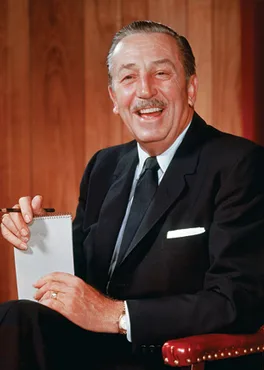
Business Role
Walt Disney co-founded the company and built the original logic that still differentiates Disney: characters and stories should not live in only one medium.
Animation as a Technology Business
Disney repeatedly used new production methods — sound, color and feature animation — to differentiate creative output. Innovation was part of the business model from the beginning.
Character Licensing
Mickey and other characters became merchandise and licensed products, demonstrating that IP could create value outside the original film.
Television
Disney embraced television at a time when studios could view the new medium as a threat. Television became both entertainment and a marketing/distribution layer for the wider Disney brand.
Disneyland
Disneyland opened in 1955 and converted studio stories into a physical destination. Disney's own archival account describes the park as the embodiment of a business strategy developed over the preceding decades. [S28]
The Cross-Media Model
characters
↓
films
↓
television
↓
merchandise
↓
physical experience
Modern Disney uses different technologies, but the economic pattern remains recognizable.
Capital Risk
Disneyland required capital far beyond normal film production. The bet was that a physical entertainment environment could create a durable relationship rather than a one-time ticket sale.
Legacy
The most important legacy is not a single character. It is a business architecture where creative IP can be reused across formats and businesses.
Evidence
The Original Flywheel
The modern Disney flywheel was visible decades before streaming.
character / film
↓
merchandise
↓
television
↓
Disneyland
↓
more character demand
Technology changed.
The business logic did not.
Disneyland as Vertical Integration
Disneyland was important because Disney stopped licensing the consumer experience entirely to someone else.
The company owned the environment, guest flow, merchandise, food, attractions and storytelling.
That same instinct — control more of the consumer experience — later appears in Disney+, resorts and cruise ships.
Decision Framework
Walt Disney's importance is best understood through the original cross-medium business model linking characters, film, television, merchandise and physical experiences.
A business-actor page should connect decisions to changes in Disney's asset base, distribution control and economics.
Major Decisions / Responsibilities
- feature animation
- character licensing
- television participation
- Disneyland
- continuous reinvestment in new formats
These decisions affect:
creative output
↓
consumer distribution
↓
capital allocation
↓
franchise monetization
↓
company structure
Strategic Tension
The central tension is that creative ambition repeatedly required capital before the commercial model was proven.
Disney leadership is unusually difficult because the company combines businesses with radically different economics:
- film production;
- software/streaming;
- sports rights;
- hospitality;
- cruise construction;
- licensing.
A decision that improves one segment can create costs or channel conflict elsewhere.
What to Watch
The most important question is the durability of the business system he created rather than any one historical product.
Useful evidence includes:
- segment margins;
- streaming profitability;
- box-office quality;
- franchise longevity;
- attendance and guest spending;
- capex returns;
- sports economics.
Capital Allocation Lens
Disney's leaders must decide how much capital belongs in:
new films / series
streaming technology
sports rights
parks
cruise ships
games partnerships
shareholder returns
That allocation determines which parts of the IP flywheel can grow.