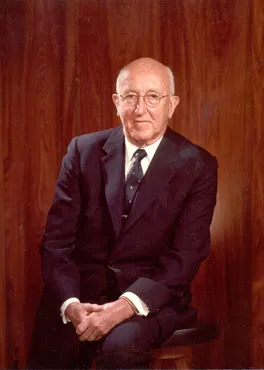
Business Role
making the strategic bet that Boeing could move beyond military aircraft into large commercial jet transportation
Business Context
Postwar Boeing was strongly associated with military bombers. Commercial jet transport required large speculative investment before airline demand was proven.
Strategic Bets
- develop the Dash 80 demonstrator
- launch the 707 commercial jetliner
- build jet-age production and airline relationships
- balance commercial investment with defense programs
Why Those Decisions Matter
Boeing leadership allocates across long-cycle programs where consequences last decades.
A CEO can change:
- production rate;
- capital allocation;
- supplier ownership;
- contract appetite;
- engineering culture;
- certification priorities;
- balance-sheet risk.
Many decisions will not show full outcomes during the leader's own tenure.
Strategic Tension
commercial aviation required risking company capital on a market that did not yet exist at today's scale
Capital Allocation Lens
Boeing must fund:
commercial inventory
+
new aircraft development
+
defense development
+
factories
+
supplier support
+
debt service
+
acquisitions / divestitures
Leadership quality depends on balancing near-term cash and long-term aerospace capability.
What to Watch
Allen's legacy is visible in Boeing becoming a dual commercial/defense aerospace company rather than remaining primarily a military manufacturer
Evidence
The Dash 80 Bet
Boeing invested company money in the 367-80 prototype before it had guaranteed commercial-airline orders.
That decision demonstrates a classic aerospace strategic problem:
a manufacturer must often build the capability before the market is fully committed.
The successful transition created the 707 and shifted Boeing into global commercial transport.
Portfolio Transformation
Allen's Boeing balanced military programs with the commercial jet bet.
That dual identity became the foundation for the modern company structure.
Commercial Risk Appetite
The jet-age transition required accepting a form of product risk very different from defense contracting.
Military customers can fund development directly.
Commercial customers generally want a proven aircraft with competitive economics.
Boeing had to invest in advance and convince airlines afterward.
That model remains relevant whenever Boeing considers a future clean-sheet commercial aircraft.
Lasting Strategic Template
The template created under Allen was:
use aerospace engineering capability
↓
take a large product bet
↓
build installed fleet
↓
create global support ecosystem
Modern Boeing still depends on this logic.