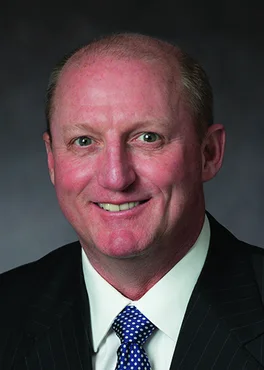
1. Business Role
Abel is responsible for Berkshire as chief executive, including its capital-allocation and risk responsibilities. He is not merely a supervisor of one utility or the custodian of a ceremonial succession title.
The role connects subsidiary performance with parent resources. It requires understanding which businesses need reinvestment, which can generate distributable cash and which exposures could threaten the wider system.
Berkshire's proxy identifies the CEO as its chief risk officer. That responsibility moved to Abel with the executive transition, while board oversight remains distinct. [S3]
2. The Business He Inherited
Abel inherited an established owner of insurers, railroads, utilities, manufacturers, service businesses, retailers and investments. He did not begin with a blank organizational chart or create the original businesses underlying that portfolio.
His own background includes accounting and operating roles at CalEnergy and the business that became BHE. He later oversaw non-insurance operations across the group. Historical career sources and current filings establish that sequence without making old executive titles current. [S65][S3]
The inherited system combines strengths with obligations: substantial resources, decentralized managers, long-lived assets and material insurance, operating and liability exposures.
3. Business Thesis
The public operating logic is continuity with active accountability: retain a decentralized structure while expecting managers to deliver sound operations and ensuring the parent allocates resources appropriately.
This is an interpretation of the first CEO letter, reported responsibilities and organizational decisions, not a claim to know private intentions. The first letter discusses specific operating performance rather than treating the portfolio as a passive list of investments. [S1]
Continuity does not mean freezing every reporting line or avoiding intervention. A system can preserve local operating responsibility while changing management or allocating additional resources when circumstances require.
4. Strategic Bets
Operating knowledge across a varied portfolio
Continued acquisition of controlled businesses
A workable leadership structure
The December 2025 appointments expanded Adam Johnson's operating oversight and set out other reporting and finance transitions. Those changes helped define the structure entering 2026 rather than abolishing operating management. [S14]
5. How the Bets Changed the Business
The executive transition concentrated group CEO accountability in Abel while retaining distinct insurance leadership and operating businesses. The later board-chair change created another separate responsibility boundary. [S3][S4]
Acquisitions also changed the controlled portfolio. OxyChem contributes an industrial operation with its own plants and customers; Taylor Morrison adds a site-built integration task.
These developments can be observed. Their ultimate long-term returns cannot yet be treated as established outcomes from the mere fact that the transactions closed.
6. Resource Allocation
Abel must assess purchases, internal investment, liquidity, securities and possible repurchases within one capital system. Each choice has to account for obligations already attached to the resources.
BHE and BNSF illustrate the need for substantial capital in established infrastructure. Insurance requires resources capable of meeting claims, including under stressed conditions. Holding-company liquidity is not identical to every subsidiary's distributable cash.
The job therefore involves comparing opportunities without pretending all earnings convert to available cash on the same schedule. Operating familiarity can help, but it does not eliminate uncertainty about future returns.
Abel also inherits the need to distinguish operating improvement from a favorable comparison. A subsidiary can report higher earnings because of prices, tax credits, an asset sale or the absence of an earlier loss. Those effects may be real while answering a different question from whether the underlying service or production system improved.
The current interim report's varied subsidiary explanations make that discipline relevant immediately. The CEO's assessment must connect financial reporting with the operating causes rather than reward every increase as equivalent progress. [S2]
7. Before and After
Before 2026, Abel oversaw non-insurance operations while Buffett retained the CEO role. From January 1, Abel became president and CEO with broader group responsibility. [S3]
The change is more than an increase in the number of businesses he follows. It moves final executive accountability for the whole capital and risk system.
The first released annual letter and interim reports provide an early record of how the portfolio is being discussed and managed. They do not provide a decade-long test of the successor model.
8. What Worked—and What Did Not
Abel's experience includes the development of a substantial energy group and years of broader operating oversight. Those are documented responsibilities and company outcomes, not proof that all success was personally produced by him. [S65][S3]
The inherited portfolio also contains real unresolved problems. PacifiCorp's wildfire liabilities, uneven retail and manufacturing performance and infrastructure execution needs remain material. Berkshire's own first CEO letter discusses weaknesses as well as successes. [S1][S2]
These are accountability challenges within the system he leads. The public record does not justify inventing a private Abel decision that personally caused every historical problem. Equally, a continuity narrative cannot be used to exempt the new CEO from addressing them.
9. Business Legacy
Abel's current importance is the transition from a founder-like allocator's personal reputation to a system that must demonstrate its durability under new executive leadership.
The evidence supports a substantial operating background and a clear transfer of authority. It is too early to declare the full long-term CEO legacy complete.
The commercial test is whether the organization continues to combine capable local management, appropriate intervention, disciplined investment and financial resilience as business conditions change.
Timeline and Misconceptions
The key sequence is energy leadership, the 2018 non-insurance vice-chair appointment, the January 2026 CEO transition and the separate September 2026 chair transition. [S65][S61][S3][S4]
Abel is not the current board chairman, not the founder of BHE's underlying utilities and not the individual inventor of products made across Berkshire. His CEO role concerns leadership and accountability for an existing multi-business organization.
Evidence
Connected Entities
- Berkshire Hathaway explains the whole company.
- Berkshire Hathaway Energy explains an important operating background.
- Ajit Jain explains the distinct insurance leadership role.