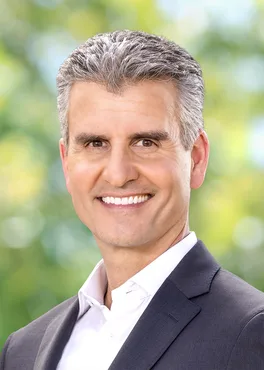
Business Role
D'Amaro is Disney's current CEO. He came to the role from Disney Experiences, where he led the company's largest FY2025 segment by revenue and the current expansion cycle. [S6][S8]
The Business He Inherited
He inherited a company with three major priorities already in motion:
1. maintain studio creative momentum; 2. turn streaming into a durable profitable business; 3. grow Experiences while ESPN moves to a direct digital model.
Unlike Iger's first CEO transition in 2005, D'Amaro begins with streaming already established and parks/cruise capital spending accelerating.
Operating Thesis
D'Amaro's early public framing emphasizes One Disney: connect storytelling, technology and consumer touchpoints rather than treating them as isolated business units. [S7]
That matters because Disney's strategic advantage comes from moving one franchise through many systems.
Experiences Background
Before becoming CEO, D'Amaro led Disney Experiences. That business generated $36.156B of FY2025 revenue and $9.995B of segment operating income. [S1]
His experience therefore comes from a capital-intensive, operationally complex business rather than a pure media background.
Capital Allocation Challenge
Disney has several large demands on capital:
- parks and cruise expansion;
- film and television content;
- sports rights;
- streaming technology;
- games investment;
- shareholder returns.
D'Amaro's central financial challenge is to decide which uses of capital best compound Disney IP.
The $60B Experiences Cycle
Disney's roughly $60B Experiences investment plan was developed during D'Amaro's leadership of the segment. [S27]
As CEO he is now responsible for balancing that expansion against companywide needs.
Streaming and Technology
D'Amaro has inherited a streaming business that is now profitable at the combined Entertainment SVOD level and moving toward deeper Disney+/Hulu integration. [S3][S12][S14]
Creative Leadership Model
Dana Walden's promotion to President and Chief Creative Officer creates a clear division: D'Amaro leads the company while Walden owns broad creative strategy. [S6][S9]
What Has Not Yet Been Proven
D'Amaro became CEO only in March 2026. It is too early to attribute long-term company performance to his tenure. Long-term assessment should separate inherited momentum from decisions clearly made under his leadership.
Business Legacy So Far
His early significance is the shift from succession planning to a new operating era centered on connected consumer experiences, technology and large Experiences expansion.
Evidence
The CEO Transition Test
D'Amaro's first years should be evaluated against concrete operating questions:
- Can streaming margins continue to improve?
- Can ESPN's DTC transition preserve sports economics?
- Can $60B of Experiences investment earn attractive returns?
- Can Disney simplify technology and consumer identity across brands?
- Can creative output remain strong while the company becomes more integrated?
His tenure is too new for a final judgment.
Why His Experiences Background Matters
Most media CEOs come from content, finance or distribution.
D'Amaro comes from Disney's physical-experience business.
That may affect how Disney thinks about:
- capital projects;
- customer service;
- yield management;
- long-duration assets;
- cross-franchise monetization.
Decision Framework
Josh D'Amaro's importance is best understood through integrating Disney's creative engines with technology and consumer touchpoints after taking over as CEO in March 2026.
A business-actor page should connect decisions to changes in Disney's asset base, distribution control and economics.
Major Decisions / Responsibilities
- Experiences expansion
- One Disney operating model
- streaming/Hulu unification
- capital allocation across parks, cruise, sports and digital products
These decisions affect:
creative output
↓
consumer distribution
↓
capital allocation
↓
franchise monetization
↓
company structure
Strategic Tension
The central tension is that his strongest operating background is in Experiences, but the CEO role requires balancing physical expansion with content, sports rights and streaming technology.
Disney leadership is unusually difficult because the company combines businesses with radically different economics:
- film production;
- software/streaming;
- sports rights;
- hospitality;
- cruise construction;
- licensing.
A decision that improves one segment can create costs or channel conflict elsewhere.
What to Watch
The most important question is whether Disney can translate cross-company integration into higher consumer lifetime value rather than just more internal complexity.
Useful evidence includes:
- segment margins;
- streaming profitability;
- box-office quality;
- franchise longevity;
- attendance and guest spending;
- capex returns;
- sports economics.
Capital Allocation Lens
Disney's leaders must decide how much capital belongs in:
new films / series
streaming technology
sports rights
parks
cruise ships
games partnerships
shareholder returns
That allocation determines which parts of the IP flywheel can grow.