1. Business Role
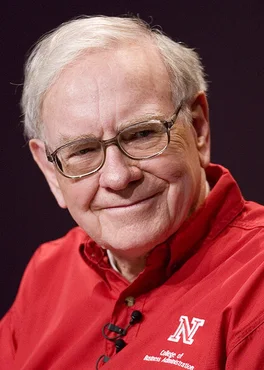
Buffett's role combined selecting businesses and securities, deciding where capital should go and choosing the ownership conditions under which managers operated. It was not the role of personally designing every product or managing every factory.
Operating businesses generated earnings and cash, insurance created obligations and investable balances, and investment decisions changed the use of those resources. His responsibility connected these activities at the parent level.
The present title is important: he is no longer Berkshire's CEO or board chairman. His continuing director and emeritus roles do not reverse the executive transition. [S3][S4]
2. The Business He Inherited
Buffett's partnership began buying Berkshire shares in 1962 and gained control in 1965. The company was an established textile operation assembled from much older businesses. [S9]
The original industry presented difficult economics. Maintaining competitive equipment required capital, while other producers could make similar investments and keep competition intense.
That starting point is different from founding a successful insurance platform from the outset. Berkshire's later structure emerged through changing the use of capital, not through the textile operation becoming an indefinitely attractive business.
3. Business Thesis
The central economic idea became owning useful businesses and allocating retained resources toward opportunities with durable earning power at appropriate prices.
Munger's influence helped move the framework beyond purchasing businesses merely because their assets or shares appeared statistically cheap. Business quality and the ability to generate or redeploy cash became increasingly important. Buffett described that influence directly. [S60]
This framework did not eliminate the need to judge price. It made the relationship among price, business economics and future reinvestment more important, not less.
4. Strategic Bets
Insurance as a recurring operating foundation
The 1967 National Indemnity acquisition brought an insurance business whose premium and claims timing created a different funding relationship from textiles. Underwriting discipline remained essential. [S9]
Quality beyond tangible assets
The 1972 See's investment through Blue Chip showed the value of consumer preference and limited incremental capital requirements. The opportunity was not fully explained by the size of tangible assets alone. [S46]
Larger controlled businesses
Acquisitions such as BNSF expanded the system into capital-intensive infrastructure. They required a model capable of accommodating reinvestment, regulation and operating management rather than only buying quoted shares. [S1]
5. How the Bets Changed the Business
Berkshire became less dependent on the original textile activity and developed several different sources of operating earnings and capital needs. The textile business eventually closed in 1985. [S9]
Insurance connected underwriting with investment resources. Consumer businesses could supply cash without requiring the same infrastructure spending as a railroad or utility. Large operating acquisitions widened the range of businesses under control.
The resulting model was not a uniform collection of identical subsidiaries. It required recognizing different obligations while deciding how resources should be used across the parent system.
6. Resource Allocation
Allocation involved acquisitions, security investments, reinvestment in subsidiaries, liquidity and potential repurchases. These uses compete for resources and must be assessed against both expected returns and financial obligations.
Insurance balances could not be treated as permanent equity without claims attached. Similarly, a subsidiary's reported earnings were not always available for distribution without impairing necessary investment.
Buffett's historical approach therefore combined selection with restraint. Holding liquidity could preserve capacity, but cash held for protection and cash awaiting an attractive opportunity were still resources with an economic cost and a purpose.
Scale changed the task. The 1991 letter explained that a result meaningful to a much smaller capital base would have less effect after the organization grew. A business could remain attractive in isolation while being too small to alter the parent's overall economics materially. [S46]
That is not a reason to reject smaller businesses indiscriminately. It is a reason to separate the quality of an opportunity from the amount of capital it can absorb and the management attention required to pursue it.
7. Before and After
The contrast is between a textile-controlled investment in the 1960s and a diversified owner of insurance, infrastructure, industrial, service and consumer businesses. The change concerns business composition and the allocation system, not only a stock-price chart. [S9][S1]
The leadership structure also changed. In 2018, Abel and Jain received formal operating vice-chair responsibilities while Buffett and Munger retained major allocation responsibilities. In 2026, Abel became CEO, followed later by a separate chairman transition. [S61][S3][S4]
Those stages show succession as a redistribution of actual responsibilities, not a single ceremonial announcement.
8. What Worked—and What Did Not
The assembled operating system and enduring businesses provide evidence that the model achieved substantial scale and usefulness. That does not make every acquisition or management decision successful.
Buffett acknowledged overpaying for Precision Castparts in 2016 and being too optimistic about its normalized earnings. He also accepted responsibility for allowing NetJets' financial condition to deteriorate before the 2009 turnaround. [S10][S30]
These are specific, attributable errors. They show different failure mechanisms: paying too much for an operating business and failing to keep an existing operation financially aligned. Neither can be explained away by the quality of Berkshire's overall history.
9. Business Legacy
Buffett's most durable commercial legacy is the ownership and allocation architecture: operating managers with substantial responsibility, a parent able to move capital and an emphasis on financial resilience.
The architecture now has to work under a successor. Continuing results will depend on people, decisions and business conditions rather than on the historical reputation of the former CEO alone.
His record is therefore best understood as the construction of a system with demonstrated strengths and visible limits, not as evidence that careful investors or managers can avoid all costly mistakes.
Timeline and Misconceptions
Control in 1965 preceded the insurance acquisition in 1967, the See's investment in 1972 and the textile closure in 1985. The 2026 CEO and chair changes are separate current governance events. [S9][S46][S3][S4]
Buffett did not found every company Berkshire owns. A shareholding is not necessarily control, float is not free permanent equity, and buying a strong company does not guarantee an appropriate purchase price.
Evidence
Connected Entities
- Berkshire Hathaway explains the full system.
- Charlie Munger explains a distinct intellectual and allocation contribution.
- Greg Abel explains current executive responsibility.