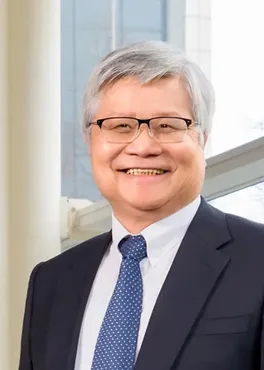
1. Business Role
Wei is not the founder who invented TSMC's business model.
He is the operator leading a mature foundry platform through a period when the scale of the business is changing rapidly.
His role can be summarized as:
TSMC's official executive biography says Wei became CEO in 2018 and Chairman and CEO in June 2024. [S14][S15]
2. The Business Wei Inherited
When Wei became CEO in 2018, TSMC was already:
- the world's leading pure-play foundry;
- deeply embedded in the fabless semiconductor ecosystem;
- a major advanced-node manufacturer;
- highly concentrated in Taiwan;
- serving smartphones as a major end market;
- beginning to expand advanced packaging and 3D integration.
Core revenue engine
Manufacture customer semiconductors on TSMC processes.
Existing strategic asset
The pure-play foundry model and customer trust.
Existing technology position
Advanced logic nodes and large manufacturing scale.
Emerging opportunity
HPC and AI workloads were becoming more important.
Emerging constraint
The cost and complexity of both leading-edge fabs and advanced packaging were increasing.
Geographic constraint
A large share of advanced manufacturing remained concentrated in Taiwan.
The business problem was therefore no longer:
Can a pure-play foundry survive?
It was:
How can a pure-play foundry keep technology leadership, add enough capacity, support AI-scale packaging and become more geographically resilient without breaking the economics of the model?
3. Business Thesis
Thesis 1 — Do not abandon the pure-play model
Wei's 2025 shareholder letter explicitly tied TSMC's success to continued adherence to the pure-play foundry model. [S2]
Business implication
Even as TSMC grows larger and offers more integration services, it should continue to enable customer products rather than launch a broad competing branded chip line.
Where it showed up
Customer neutrality remains central while TSMC expands into packaging and global manufacturing.
Thesis 2 — AI is a structural demand driver, not only a short cycle
Thesis 3 — Technology leadership, manufacturing excellence and customer trust reinforce one another
TSMC publicly frames these three elements as the fundamentals of its business. [S2]
Business implication
A new node is not enough.
TSMC also needs:
- yield;
- capacity;
- quality;
- reliable delivery;
- customer confidence.
Thesis 4 — Geographic expansion must preserve business discipline
Wei-era TSMC is expanding in the U.S., Japan and Europe.
But management also publicly discusses the cost and margin dilution associated with overseas fabs. [S7]
Business implication
Diversify manufacturing without pretending every geography has the same cost structure.
4. Strategic Bets
Strategic Bet 1 — Push the N2 technology family into high-volume manufacturing
THE PROBLEM
Leading customers continue to demand better power, performance and density.
FinFET scaling is reaching new limits.
THE BET
Move TSMC into nanosheet-transistor production through N2 and then extend the family with N2P and A16.
THE MECHANISM
Keep leading-edge customers designing around TSMC's roadmap.
THE RISK
New nodes require enormous R&D and fab investment before yield and customer volume are mature.
THE RESULT
N2 entered high-volume manufacturing in Q4 2025 and reached 3% of wafer revenue in Q2 2026. [S2][S6]
THE BUSINESS IMPACT
TSMC maintained its position at the front of logic-process scaling while creating a new platform family for 2026 and beyond.
ATTRIBUTION
Leadership-level
N2 is an organizational technology program. Wei's role is leadership and capital allocation, not personal invention.
Strategic Bet 2 — Expand advanced packaging aggressively
THE PROBLEM
AI performance is increasingly constrained by memory bandwidth and multi-die integration, not only transistor density.
THE BET
Expand CoWoS, SoIC and other 3DFabric capabilities and capacity.
THE MECHANISM
Capture more value from the customer's system architecture while solving packaging bottlenecks that can limit AI accelerator shipments.
THE RISK
Packaging capacity requires capital, specialized equipment and coordination with memory, substrate and material suppliers.
THE RESULT
CoWoS demand surged with generative AI, and TSMC continued scaling package size and capacity. [S11][S24]
THE BUSINESS IMPACT
Foundry value expanded from:
wafer manufacturingto:
wafer + advanced integrationStrategic Bet 3 — Build a larger global manufacturing network
THE PROBLEM
Customers and governments want more geographic supply resilience.
THE BET
Expand manufacturing outside Taiwan through Arizona, Japan and Europe while continuing major investment in Taiwan.
THE MECHANISM
Place selected capacity closer to customers and diversify manufacturing geography.
THE RISK
Overseas fabs can cost more to build and operate.
TSMC has explicitly said overseas expansion dilutes gross margin during ramp-up periods. [S7]
THE RESULT
The company has operating or planned fabs in the United States, Japan, China and Germany in addition to its Taiwan base. [S2][S3][S23]
THE BUSINESS IMPACT
TSMC changed from a globally selling but Taiwan-centered manufacturing company toward a more geographically distributed foundry network.
Strategic Bet 4 — Increase capital spending behind AI/HPC demand
THE PROBLEM
A fab started today may not contribute meaningful capacity for years.
TSMC must decide how much future AI demand is real before the future is fully visible.
THE BET
Raise 2026 capital spending to US$60–64 billion. [S7]
THE MECHANISM
Build capacity early enough that customers have leading-edge and packaging supply when their products arrive.
THE RISK
If demand slows, TSMC can be left with underutilized, highly expensive capacity.
THE RESULT
TSMC said roughly 70–80% of the 2026 capital budget would go to advanced process technologies and 10–20% to advanced packaging, testing, mask making and related areas. [S7]
THE BUSINESS IMPACT
Capital allocation increasingly mirrors the AI stack:
leading-edge logic
+
advanced packaging
+
global capacity
5. How Those Bets Changed the Business
Product
wafer fabrication
↓
leading-edge logic + specialty
↓
logic + advanced packaging + system integration
Customer
fabless chip companies
↓
fabless + system companies + AI infrastructure customers
Revenue logic
manufacturing volume
↓
advanced-node value + packaging + scale
Distribution
The business remains direct and relationship-driven, but customer roadmaps increasingly require multi-year capacity planning.
Moat
technology + yield + scale
↓
technology + yield + scale + packaging + global capacity + trust
Industry position
leading pure-play foundry
↓
foundry + integration platform for AI-scale systems
6. Resource Allocation
Wei's period is especially useful for analyzing resource allocation because the numbers are so large.
Advanced process technology
TSMC said 70–80% of its 2026 capital budget would go to advanced process technologies. [S7]
Advanced packaging
TSMC allocated 10–20% of the 2026 capital budget to advanced packaging, testing, mask making and related areas. [S7]
R&D
TSMC's 2025 annual materials estimate R&D around 7% of revenue, with major programs including N2, A16, A14, 3D IC and next-generation lithography. [S2]
Global fabs
Major resources are going to:
- Arizona;
- Kumamoto, Japan;
- Dresden, Germany;
- new advanced capacity in Taiwan.
Talent and operations
The expansion requires not only fabs but global replication of TSMC's manufacturing processes, operations and quality systems.
7. Business Model: Before vs. After
TSMC when Wei became CEO in 2018
Value created Leading foundry manufacturing
Core product Wafer fabrication / process technology
Major demand center Smartphones plus growing HPC
Packaging Important but not yet the center of AI-system supply
Geographic manufacturing Strongly Taiwan-centered
Technology transition FinFET scaling
TSMC in 2026
Value created Leading process + high-volume manufacturing + advanced integration
Core product Foundry platform spanning N2/A16, packaging and design ecosystem
Major demand center HPC at 66% of Q2 2026 revenue [S6]
Packaging Strategic AI/HPC bottleneck and growth area
Geographic manufacturing Taiwan plus significant U.S., Japan and Europe expansion
Technology transition Nanosheets + backside power + larger 3D integration
8. What Worked / What Didn't
WHAT WORKED — Leading-edge technology ramp
N3 became a large revenue contributor and N2 entered high-volume production.
Capability created
Continued leadership in advanced process technology.
WHAT WORKED — Advanced packaging expansion
CoWoS became critical to AI accelerator supply.
Capability created
TSMC moved closer to system-level integration.
WHAT WORKED — AI/HPC customer exposure
HPC became the company's largest platform category.
Capability created
TSMC became deeply embedded in the AI infrastructure supply chain.
TRADE-OFF — Overseas manufacturing
TSMC's global footprint expands resilience and local capacity, but management expects overseas fabs to dilute margins during ramp-up. [S7]
What this reveals
Strategic resilience has an economic cost.
RISK — Capacity planning can be wrong
The largest unresolved risk is not a single failed transaction.
It is whether long-lived capacity investment matches future customer demand.
This is a structural risk of the foundry model.
9. Business Legacy
Wei's tenure is still ongoing, so "legacy" should be treated as an emerging structure rather than a final judgment.
The business is moving:
from leading-edge foundry

to

leading-edge foundry + advanced packaging + global manufacturing network
and:
from smartphone-heavy demand

to

AI/HPC-heavy demand
The central management challenge is to scale without breaking the principles that made TSMC valuable:
technology leadership
manufacturing excellence
customer trust
pure-play neutrality
These changes are built by TSMC as an organization, not by one executive alone.
Career Background
Wei joined TSMC in 1998 after semiconductor-technology roles at Chartered Semiconductor Manufacturing and STMicroelectronics. [S14][S15]
Inside TSMC he held leadership roles across:
- operations;
- business development;
- technology business;
- co-COO;
- co-CEO;
- CEO;
- chairman and CEO.
This matters because he reached the CEO role through both technology and operating functions rather than arriving as an external financial executive.
Career Timeline
Semiconductor roles at STMicroelectronics and Chartered Semiconductor
Joins TSMC
Senior Vice President, Business Development
Co-Chief Operating Officer
President and Co-CEO
Becomes CEO
Becomes Chairman and CEO
N2 enters high-volume manufacturing
N2 ramps, A16 approaches production and capital spending increases for AI/HPC demand
Common Misconceptions
"C.C. Wei created TSMC's pure-play business model."
No.
That model predates his CEO tenure by decades and is associated with founder Morris Chang.
"TSMC's AI growth means it became an AI chip designer."
No.
TSMC manufactures and packages customer designs.
"Global expansion means TSMC is moving out of Taiwan."
"Higher capital spending guarantees future growth."
No.
The investment is based on customer demand expectations, but semiconductor capacity carries long lead times and utilization risk.
Evidence
- Wei became CEO in 2018 and Chairman and CEO in 2024. [S14][S15]
- TSMC's 2025 shareholder letter reaffirmed the pure-play model and AI demand thesis. [S2]
- N2 entered high-volume manufacturing in Q4 2025. [S2]
- HPC reached 66% of Q2 2026 revenue. [S6]
- TSMC raised 2026 capital spending to US$60–64 billion. [S7]
- TSMC publicly acknowledges margin dilution from overseas-fab ramp-up. [S7]